
129th Rescue Wing Supports Counterdrug Task Force Hoist Exercise
by SrA. Kevin Nious
129th Rescue Wing Public Affairs
May 15, 2026
MOFFETT AIR NATIONAL GUARD BASE, Calif. — The whipping winds and deafening thunder from the helicopter’s rotor blades served as a blunt warning to anyone who approaches. Undeterred, two law enforcement officers soldiered through the debris field and clipped onto a hook that was tethered to the military aircraft overhead. Within seconds, the pair were hoisted nearly 60 feet in the air and safely pulled into the rescue helicopter’s cabin.
This carefully orchestrated sequence was part of an exercise designed to familiarize civilian law enforcement and military service members with safety procedures for riding a hoist when landing an aircraft is not feasible. The course took place on April 28-29 near the flight line on base, as part of the California National Guard Counterdrug Task Force’s Team Hawk joint training.
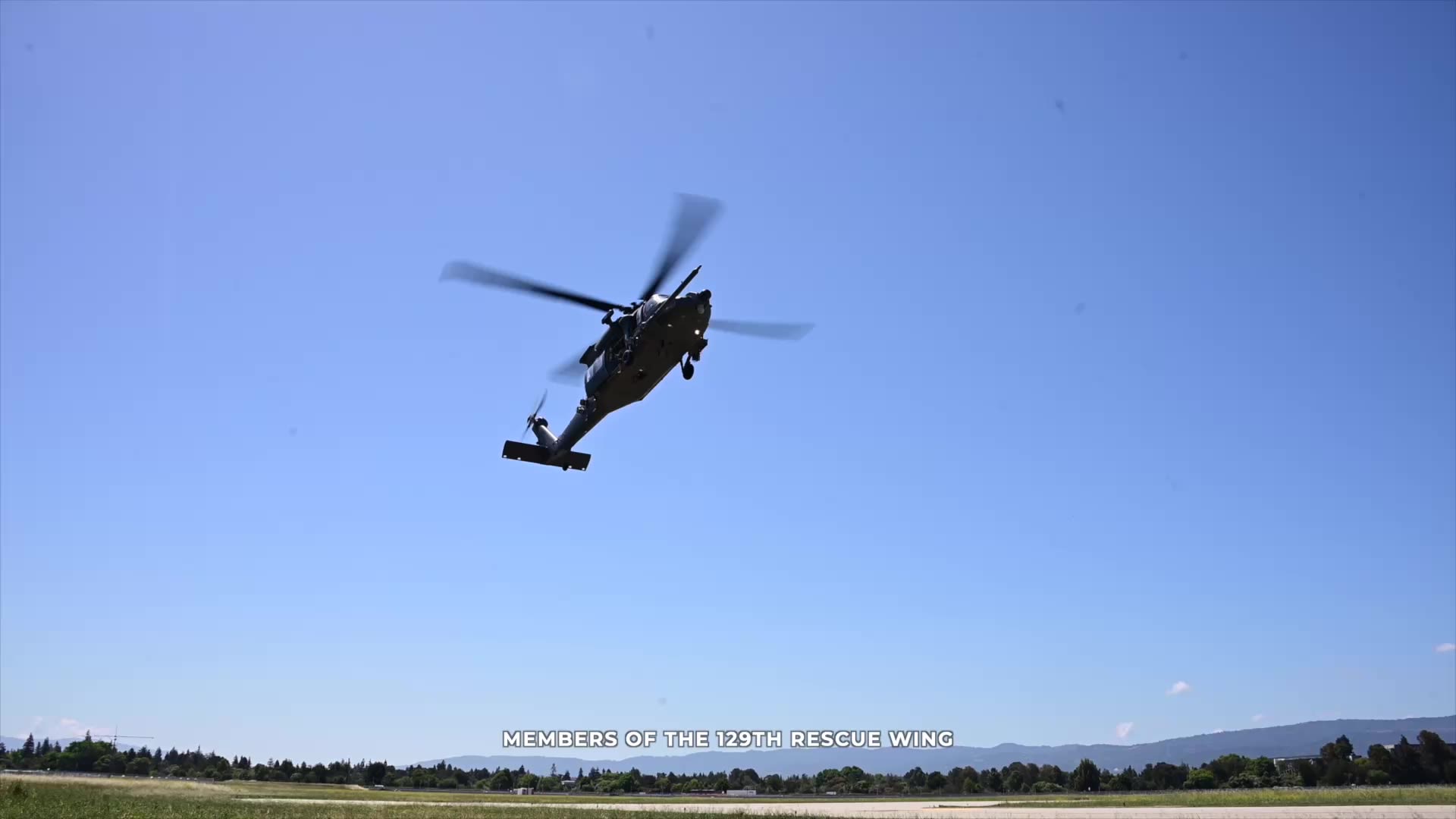
Team Hawk plays a critical role within the CalGuard’s counterdrug mission, utilizing the 129th Rescue Wing’s HH-60W Jolly Green II helicopters, aircrew, pararescuemen and maintainers to support local law enforcement agencies in the eradication of illegal narcotics.
“Team Hawk is an invaluable resource that we use often,” said a U.S. Army Sgt. 1st Class in charge of ground operations with CDTF. “Whether it’s aerial reconnaissance, logistics, (transporting) illegal narcotics, prisoners, there’s an unlimited amount of capabilities they bring to the counterdrug program.”
During the drill, aircrew personnel with Team Hawk provided guidance as members of the Task Force practiced securing the hoist cable to their harnesses, ascending into a helicopter and descending back to the ground.
“They found out how violent that (rotor wash) is,” said a U.S. Air Force helicopter flight engineer with Team Hawk. “It’s quite the task to try and push yourself through that blast of wind and hook up (to the hoist) at the same time, (but) they all did it properly, safely and securely.”
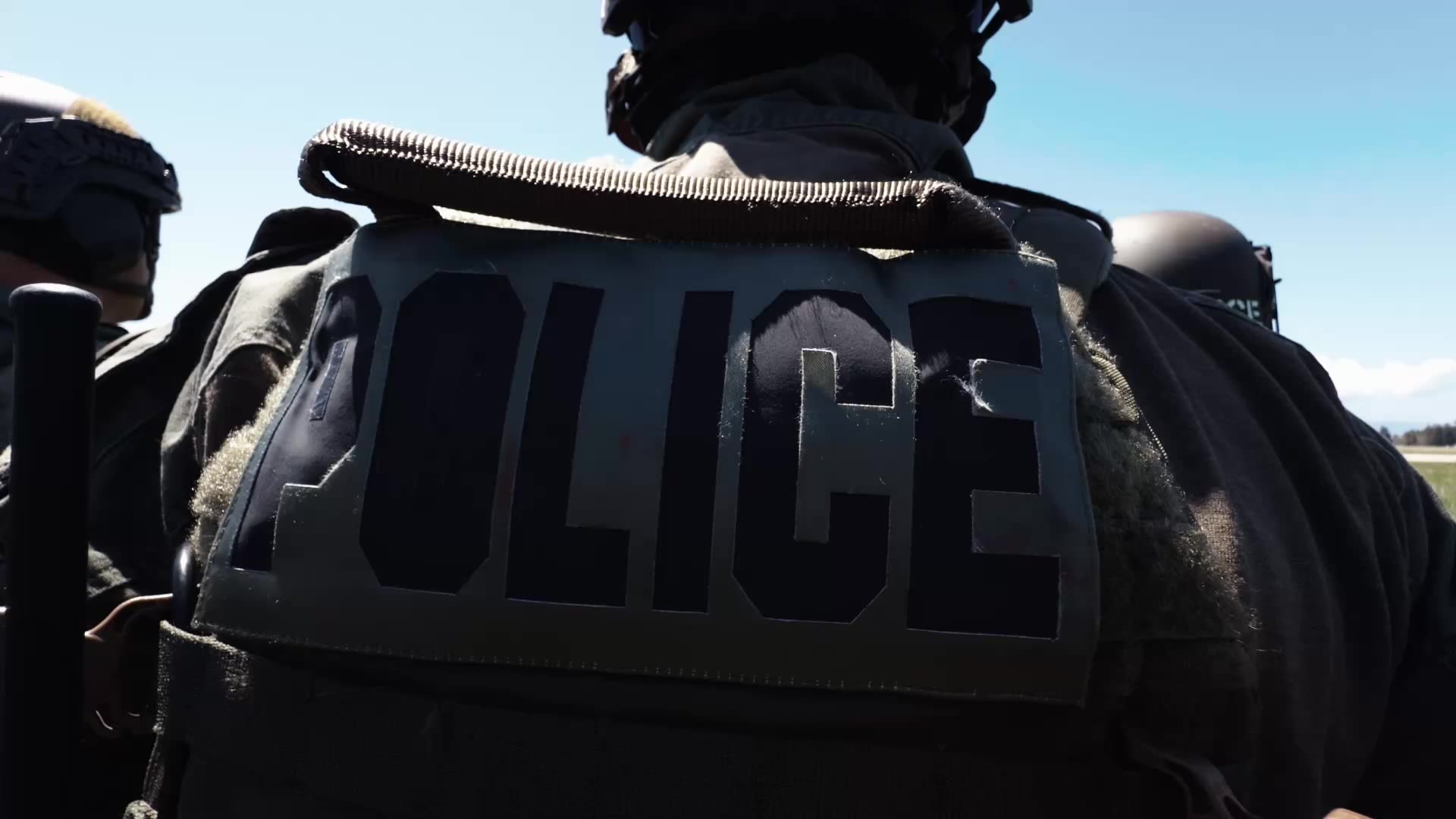
Annual training is required for anyone planning to use the hoist during an operation. More than 40 officers and military members participated in the two-day event, with experience levels ranging from first time flyers to those with nearly a decade under their belts.
“If we’re on a mission and this is the first time (a team member) has been exposed to any kind of hoist operations, you’ve just added an unnecessary risk factor to the mission,” said the ground operations lead who is on his eighth year with the Task Force. “Getting out here, getting certified and getting familiar with the equipment makes us all a lot more successful when we’re out on operations.”
Those with less experience agreed that the hands-on course helped boost their confidence.
“I have a fear of heights, but throughout the class (the instructors) made me feel very comfortable,” said a U.S. Air Force crew chief who recently completed his first month with the Task Force. “This knowledge will definitely help on future operations.
CDTF has a proven track record of translating rigorous rehearsal into operational success. To date, the Task Force has supported the seizure of nearly 38,000 pounds of fentanyl and more than 53.5 million fentanyl pills, with an estimated total street value of $518.5 million.
“I’ve seen the immediate impact, I wake up every day excited to go to work,” said the U.S. Army Sergeant 1st Class. “It's a very rewarding and fulfilling job.”
 Built with Shorthand