
Birds With Buckets Bolster State's Wildfire Preparedness
Cal Guard and CAL FIRE train for 2026 Fire Season
Ground and aircrews practice aerial water delivery techniques during a joint wildfire training scenario at Lake Pardee, California, May 19–20, 2026. (U.S. Army National Guard video by Sgt. 1st Class Obed Gutierrez)
Ground and aircrews practice aerial water delivery techniques during a joint wildfire training scenario at Lake Pardee, California, May 19–20, 2026. (U.S. Army National Guard video by Sgt. 1st Class Obed Gutierrez)
by Sgt. Joseph Lerma
40th Combat Aviation Brigade Public Affairs
Aug. 10, 2026
SUTTER CREEK, Calif. — Soldiers and Airmen from the California Military Department conducted a joint fire suppression training exercise with members of the California Department of Forestry and Fire Protection on May 19, 2026.
This exercise brought together ground and air assets to deliver water from the air precisely where it was needed on the ground. "The goal here is to put out the edge of the burning fuel and not the center of the fire,” said Capt. Skyler Merritt, a Cal Fire military helicopter manager.
Merritt said crews focus on containing the fire's edge rather than extinguishing every acre. “We're not putting water on all 10,000 acres. It's gonna be whatever is the perimeter and whatever is gonna be the highest priority. We want to start from something that the fire can't get past — we call that an anchor point."
When Cal Fire resources are exhausted, Cal Guard’s aviation readiness ensures aviation crews can integrate quickly into firefighting operations when called upon. “They don't have time to warm up in the bullpen,” said Merritt. “It's something where they need to get called out right away, to go from whatever the other missions that the National Guard is supporting at that time, to being able to just switch hats and jump into the firefighting mission — I think that's something that's super impressive."
Chief Warrant Officer 2 RJ Zanon, a Black Hawk helicopter pilot with Cal Guard, emphasized the value of the training for both Cal Guard and Cal Fire. “It's good training for both Cal Fire and the National Guard because it gets our pilots the training they need for the water drops, and it also gets the helicopter managers from Cal Fire the training they need to essentially work with us more fluidly," said Zanon.
Effective communication and teamwork are hallmarks of mission success when Cal Guard and Cal Fire operate together fighting wildfires. During the exercise, Cal Fire military helicopter managers integrated directly with Cal Guard aircrews aboard Black Hawk and Chinook helicopters.
"Bringing in a manager that is not an actual Army soldier, it's a little bit different than what we are used to,” said Zanon. “He actually becomes part of the crew. The helicopter manager is in the back kind of helping guide the aircraft where it needs to be. They're also the ones that tell you when to drop the water. That's why the helicopter manager is such an important part of the team because they essentially get the water where it needs to go."
Years of joint training and real-world wildfire response have made the partnership between Cal Guard and Cal Fire a model for other states.
“This is a program that not only works well for the state. It's such a good program that other states are actually looking to see if they could build something similar,” said Zanon.
Annual training exercises like these, Zanon said, are critical to maintaining the partnership and ensuring it remains ready when wildfires occur and Guard aviation assets are called into service.
“They don't have time to warm up in the bullpen,” said Merrit. “It's something where they need to get called out right away, to go from whatever the other missions that the National Guard is supporting at that time, to being able to just switch hats and jump into the firefighting mission — I think that's something that's super impressive."
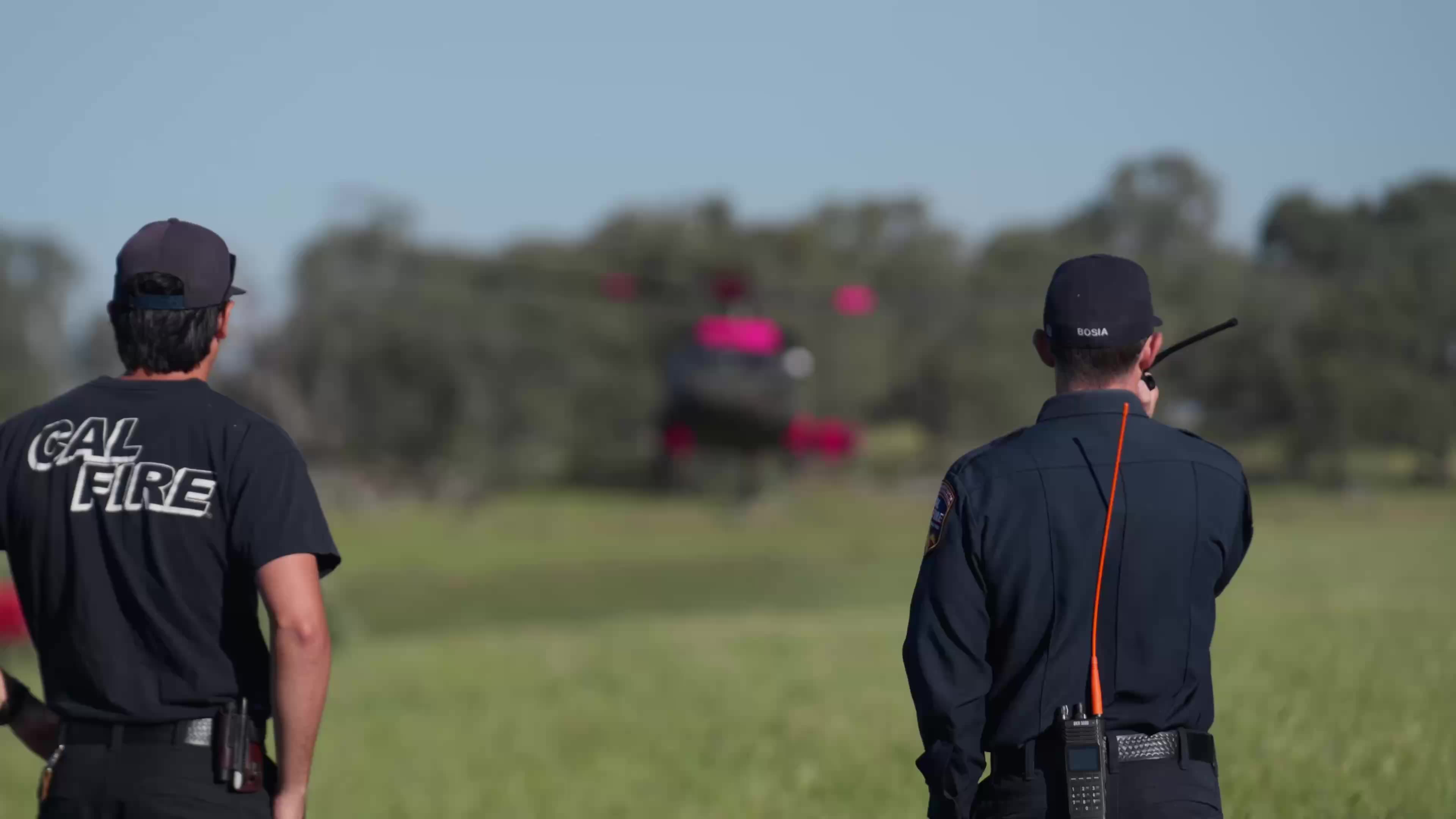
Ground and air crews practice aerial water delivery techniques. (U.S. Army National Guard video by Sgt. Joseph Lerma)
Ground and air crews practice aerial water delivery techniques. (U.S. Army National Guard video by Sgt. Joseph Lerma)
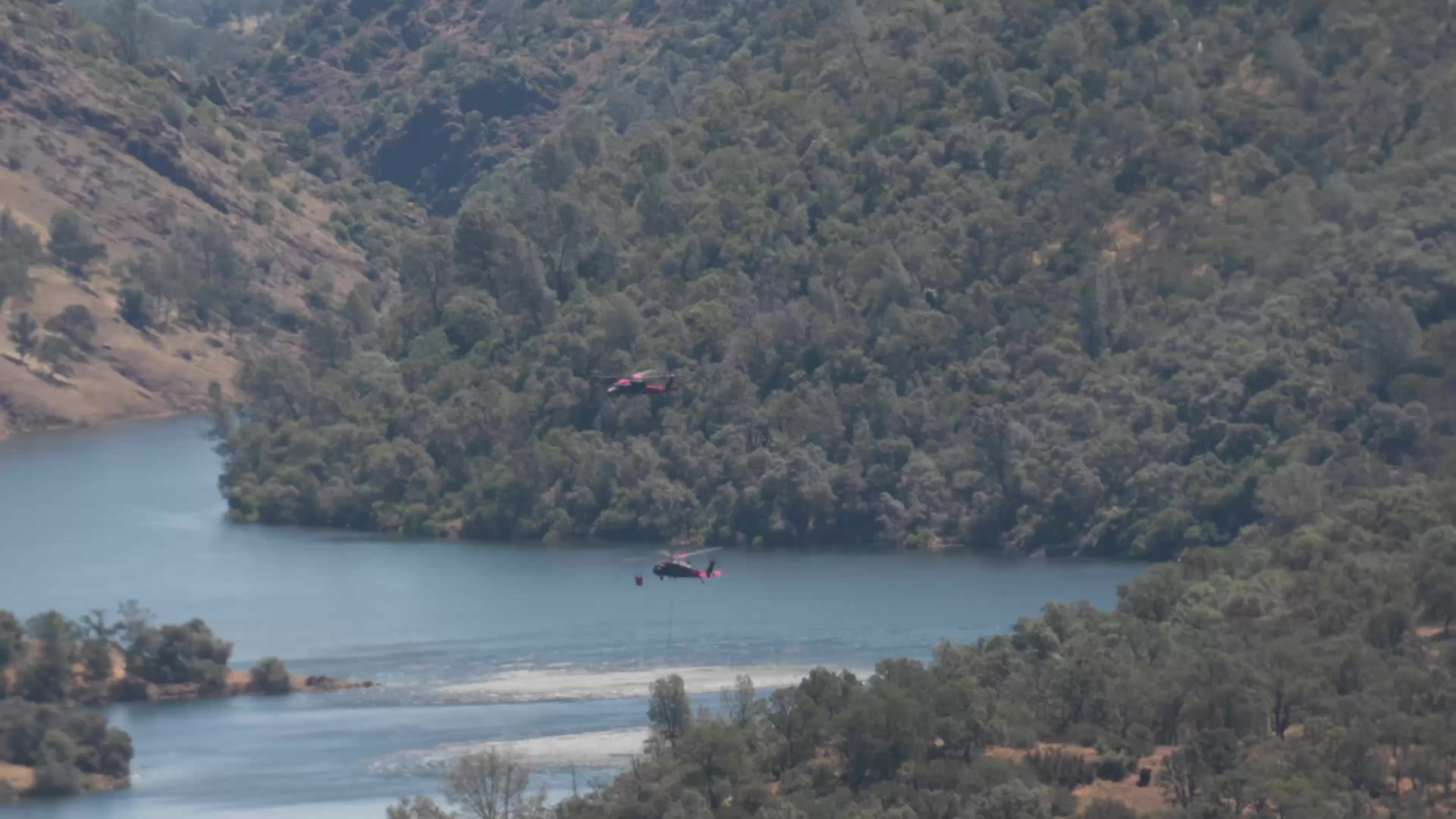
Ground and air crews practice aerial water delivery techniques. (U.S. Army National Guard video by Sgt. Joseph Lerma)
Ground and air crews practice aerial water delivery techniques. (U.S. Army National Guard video by Sgt. Joseph Lerma)
“This is a program that not only works well for the state. It's such a good program that other states are actually looking to see if they could build something similar,”
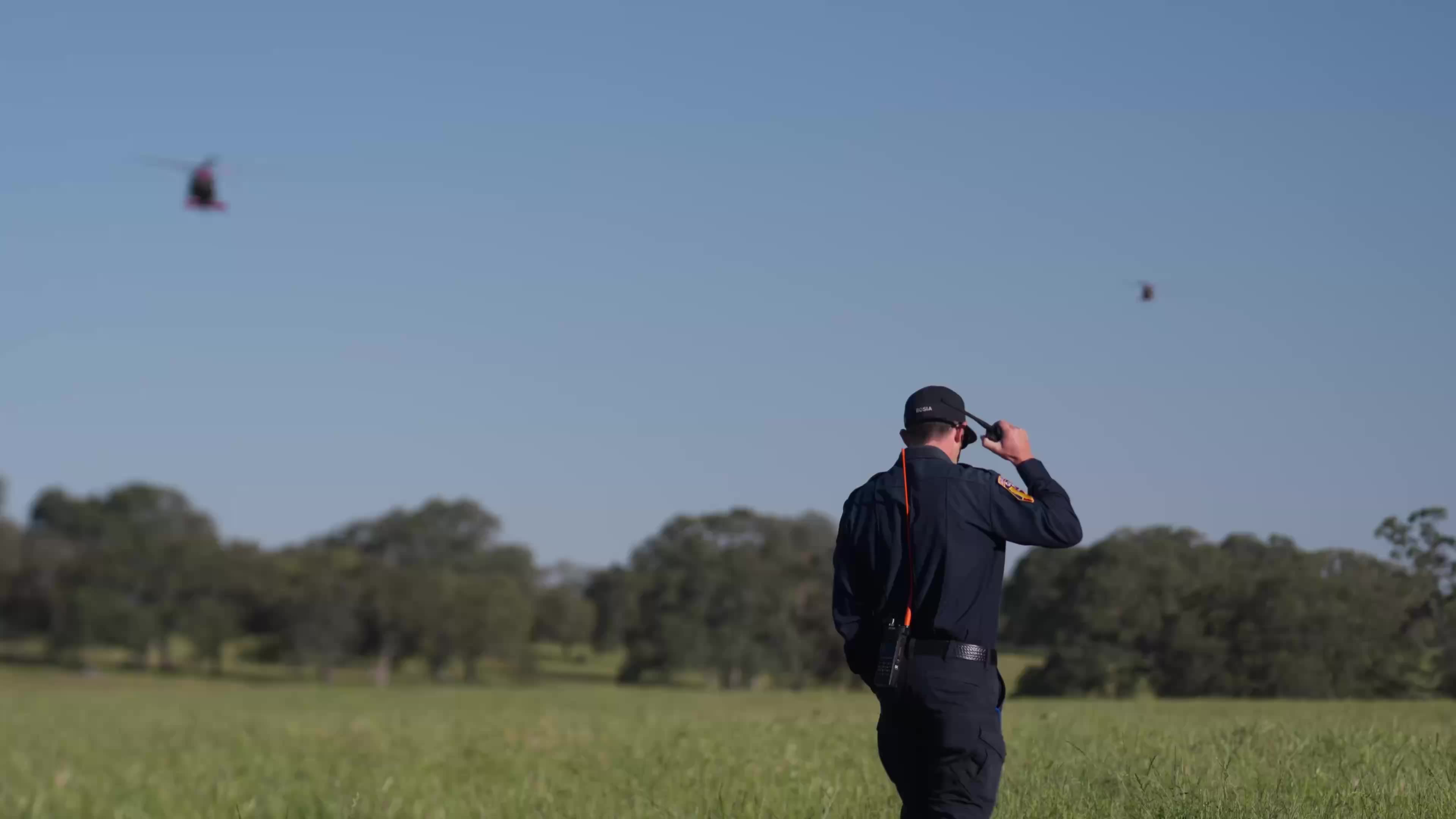
Ground and air crews practice aerial water delivery techniques. (U.S. Army National Guard video by Sgt. Joseph Lerma)
Ground and air crews practice aerial water delivery techniques. (U.S. Army National Guard video by Sgt. Joseph Lerma)
Bucket in the dip. Crewmembers draw water quickly.
An arial ballet takes shape...
Crews get familiar dropping water from their Bambi buckets.
Large Chinook helicopters add power and versatility.
A Chinook hauls water to its next target.
Crews train to address different target scenarios.
 Built with Shorthand