
First ever Dragonfire Exercise
146th Security Forces and Emergency Management train together

Story by Senior Airman Kalia Jenkins
Photos by Senior Airman Francesca Skridulis
146th Airlift Wing Public Affairs
CAMARILLO, Calif. - A four-person fire team stacks up outside a doorway of a two-story building made of burn-scarred shipping containers. Armed with their M4A1 carbine training rifles, they use their tactics and training to safely clear each space inside, challenging actors performing as hostiles and retrieving volunteer hostages. Another four-person team in chemical suits and gear is on standby, ready to respond to any chemical, biological, nuclear, or radiological scenario threat they come across.
This scene is not set in a foreign country but was a training exercise conducted on September 8 through 9 in Camarillo by the 146th Security Forces Squadron and the Emergency Management Flight, part of the 146th Civil Engineer Squadron, both assigned to the 146th Airlift Wing on Channel Islands Air National Guard Station.
This training exercise was the inaugural effort between the 146th SFS and the 146th CES, as they worked together to enter and clear buildings in close-quarter battle scenarios with close-quarter combat techniques. The exercise occurred at the Ventura County Fire Department training center, a joint training location utilized by Oxnard College Fire Academy and the Ventura County Sheriff's Department.
Air Force Master Sgt. Tess Ariza, 146th SFS first sergeant, said the 146th AW is fortunate to utilize such a quality facility for the exercise.
"We are super lucky that we have these nice training facilities right outside our base that they have let us come out here and use," said Ariza. "It's cool working with the local community. It shows that the Guard trains with the sheriffs and the fire department and that they can see us out here. The troops also like getting outside the base and doing hands-on training. That's why they joined, and that's why they come to drill."
Scheduling seven 146th SFS members and four 146th CES participants initially for the exercise, four new 146th SFS members joined on the second day, adding the unique challenge of updating and integrating them into the format and training for this particular exercise.
The integrated teams performed 14 iterations of clearing a building throughout the exercise. During the last few iterations, SFS used their M4A1 carbine rifles with faux ammunition known as "simuntions." "Simuntions" are rounds filled with paint, like paintballs, but are smaller in diameter and made to fit the M4. They identify if a round was fired and where it hit the target. Senior Airman Justin Rosales, 146th SFS defender, said this helped his team members and their instructors analyze if role players used the lowest force required per their training and regulations during the drill.
"We try to use the least force possible," said Rosales. "We prefer to use our communication. We call it verbal judo in law enforcement; we will challenge them. 'Hey, put the gun down,' 'I need you to do what I tell you to do,' and then depending on what we call the totality of circumstances that will determine what other use of force we will use."
Airman 1st Class Jessie Tavares, an exercise participant assigned to the 146 SFS, said integration was another critical term used by most participants in the exercise.
"It's great to work with Emergency Management because they know things that us Security Forces won't know or have too much knowledge in, and they can share that information with us, and that's another thing we can take into consideration before focusing on the close-quarter battle portion of the training," said Tavares.
Tech. Sgt. Josh Farol, an emergency manager and the lead role player with the 146th Emergency Management Flight, agrees with Tavares, "We usually do our training; historically, since I've gotten here, with each other. So it's good to integrate with other squadrons and teams, see different ways to do things, and learn different tactics we're unfamiliar with."
The first day of the exercise, dubbed "Dragonfire," the instructors often pulled participating members aside and gave them techniques, tips, and tricks.
One of those participants, Airman 1st Class Samantha Martinez, 146th CES, said, "I liked our first exercise - learning to clear the room, mainly cause I am someone that kind of hesitates at first but then 'Oh, okay, I get it.' I can do what you're asking me to do."
The culminating event for the exercise included a scenario inject which exercise intelligence analysts identified a possible chemical lab being set up and used in a small two-story structure. An eight-person team from the 146th SFS cleared the building of enemy combatants safely using their training M4s and munitions, coming into contact with simulated unknown chemical agents in a pseudo-makeshift lab while coordinating critical information with the 146th CES.
Next, the four team members from 146th CES cautiously entered the building using their Joint Chemical Agent Detector, which automatically detects, identifies, and alarms chemical agents and toxic vapors.
Technical Sgt. Nathan Barboza analyzed the team's time and responses to the new and existing elements. Using equipment such as a MultiRAE Pro, a wireless handheld portable multi-threat monitor used for radiation and chemical detection, Barboza called out the machines' indications to simulate results that the device would present and then provided more scenario changes. Carefully maneuvering around a small room that looked like a makeshift chemical lab, the 146th CES team tested unknown substances they found.
Communicating constantly for safety and clarification and following carefully planned procedures, the 146th CES team pulled out vials and test strips. At the same time, 146th CES leadership observed their actions in the adjacent room.
The exercise finished with the 146th CES determining the unknown substance, per the scenario, successfully containing the contaminant according to protocol, and the mission completed.
Air Force Maj. Timothy Chow, 146th CES commander, said the training performed during the exercise helps Airmen produce more agility, flexibility, and integration in performing duties outside their normal purview in locations where they may not have all of the tools generally at their disposal.
"Learning to adjust and adapt to maintain air superiority is part of a call to action from the highest levels of the U.S. Air Force and the Department of Defense," Chow said. "We have to integrate with areas and scenarios that may not be familiar with our primary AFSC. Looking at potential scenarios in the future, there may not be a full wing to support a mission or scenario. Smaller teams may react to it without a full support team there. So, it's all about that agile combat employment and our multi-capable Airmen who are trying to ensure that we can still accomplish the mission without all the desired resources we may not have."

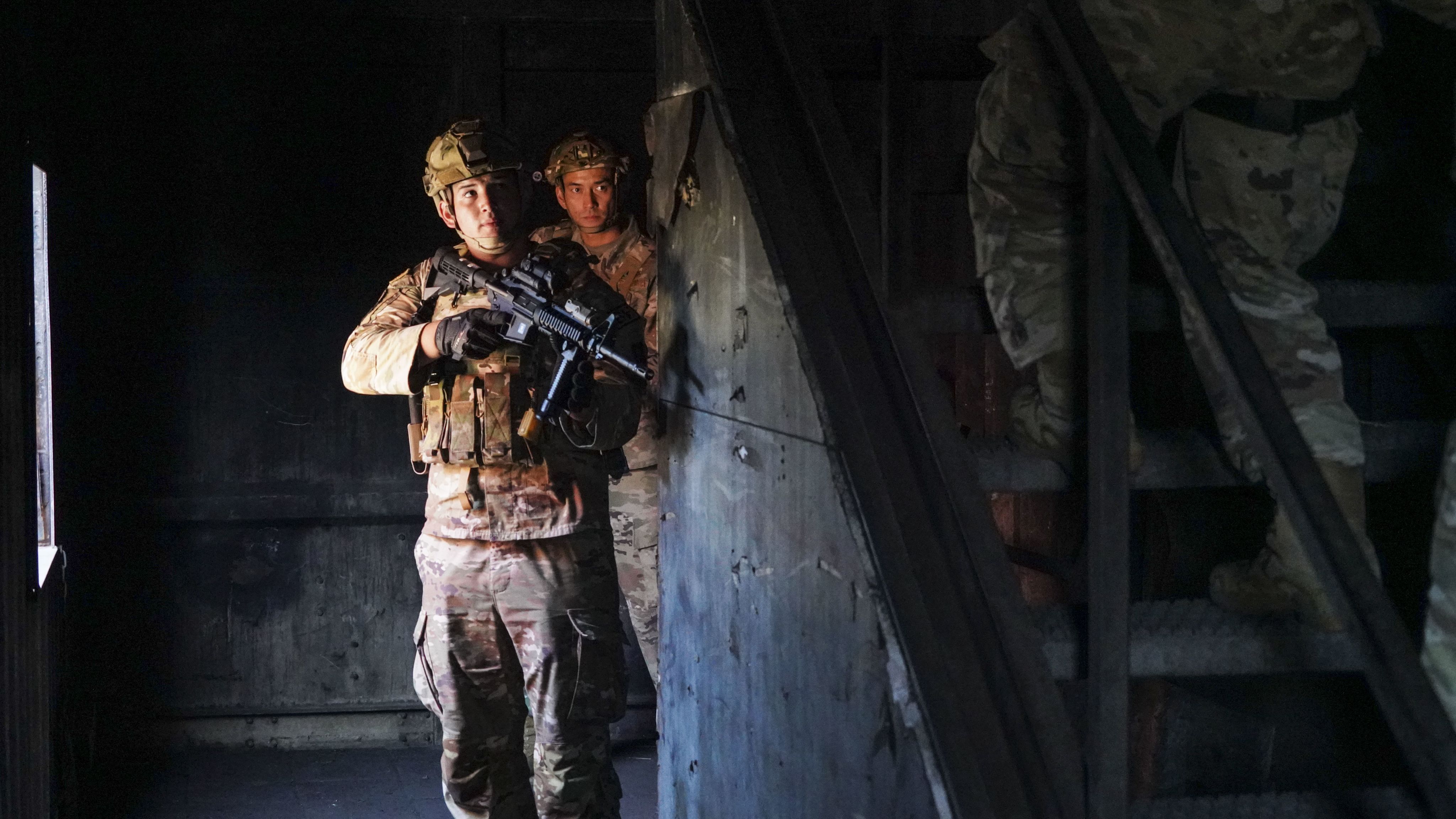
Airman 1st Class Travis Mathis, 146th Security Forces Squadron, and Tech. Sgt. Joshua Farol, 146th Civil Engineer Squadron emergency management technician, practice clearing and securing a room during an exercise at the Oxnard College Fire Academy.
Airman 1st Class Travis Mathis, 146th Security Forces Squadron, and Tech. Sgt. Joshua Farol, 146th Civil Engineer Squadron emergency management technician, practice clearing and securing a room during an exercise at the Oxnard College Fire Academy.

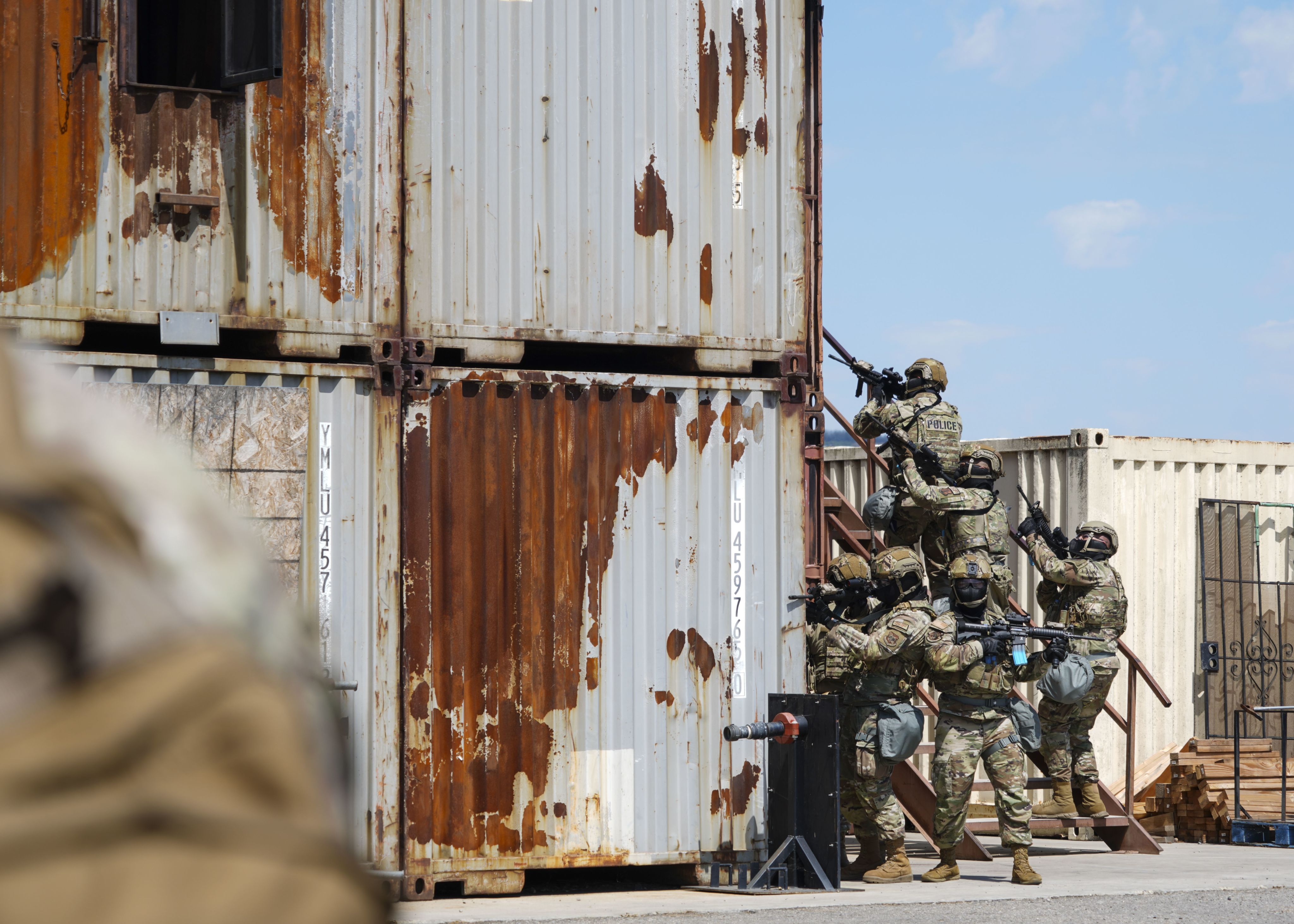
Airmen assigned to the 146th Security Forces Squadron stack up in formation before entering a building in an integrated exercise with Emergency Management Flight Airmen.
Airmen assigned to the 146th Security Forces Squadron stack up in formation before entering a building in an integrated exercise with Emergency Management Flight Airmen.
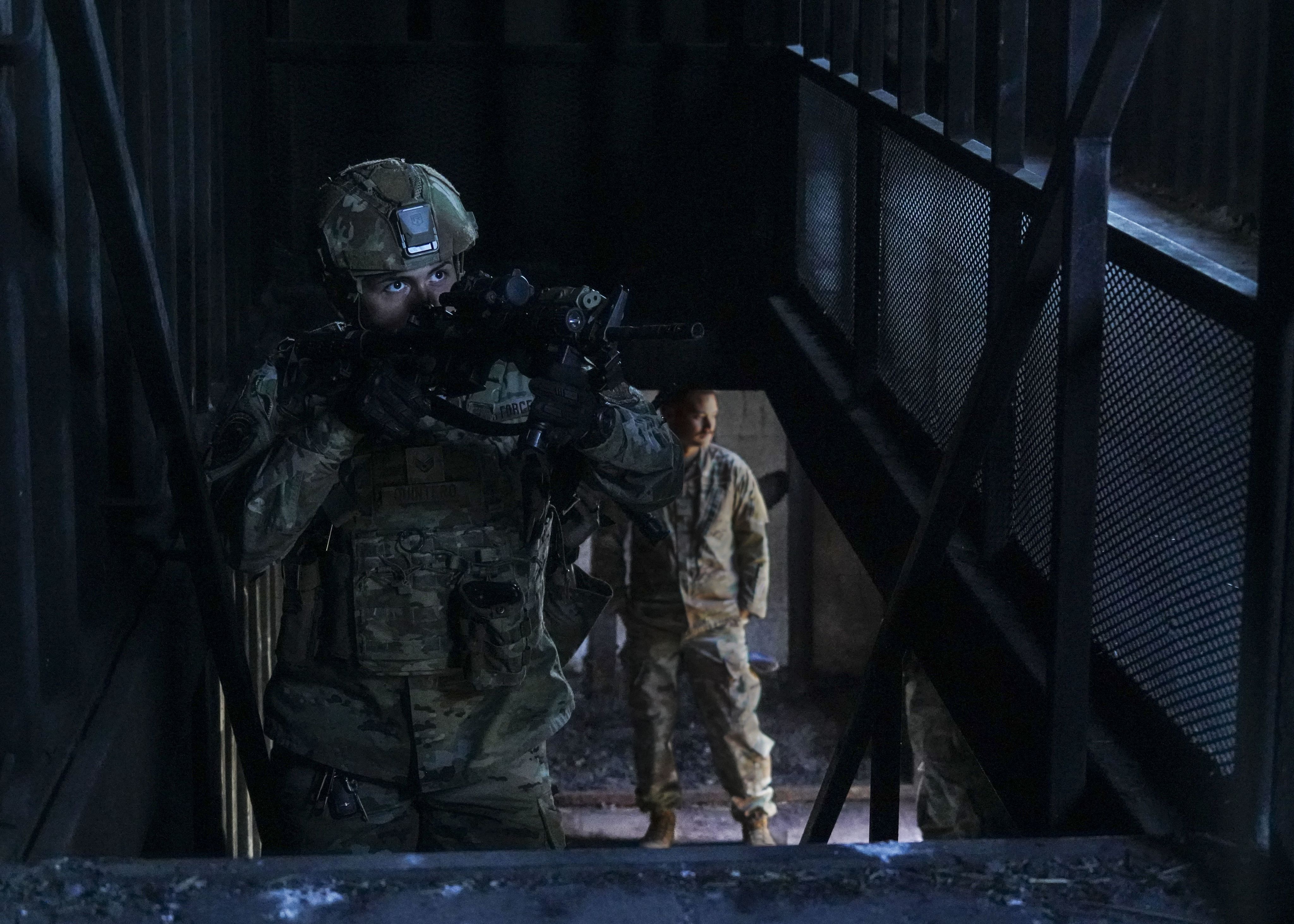
Staff Sgt. Efren Quintero, 146th Security Forces Squadron, practices clearing a two-story building as part of a fire team, during multi-unit training exercise Operation Crisis Beach.
Staff Sgt. Efren Quintero, 146th Security Forces Squadron, practices clearing a two-story building as part of a fire team, during multi-unit training exercise Operation Crisis Beach.

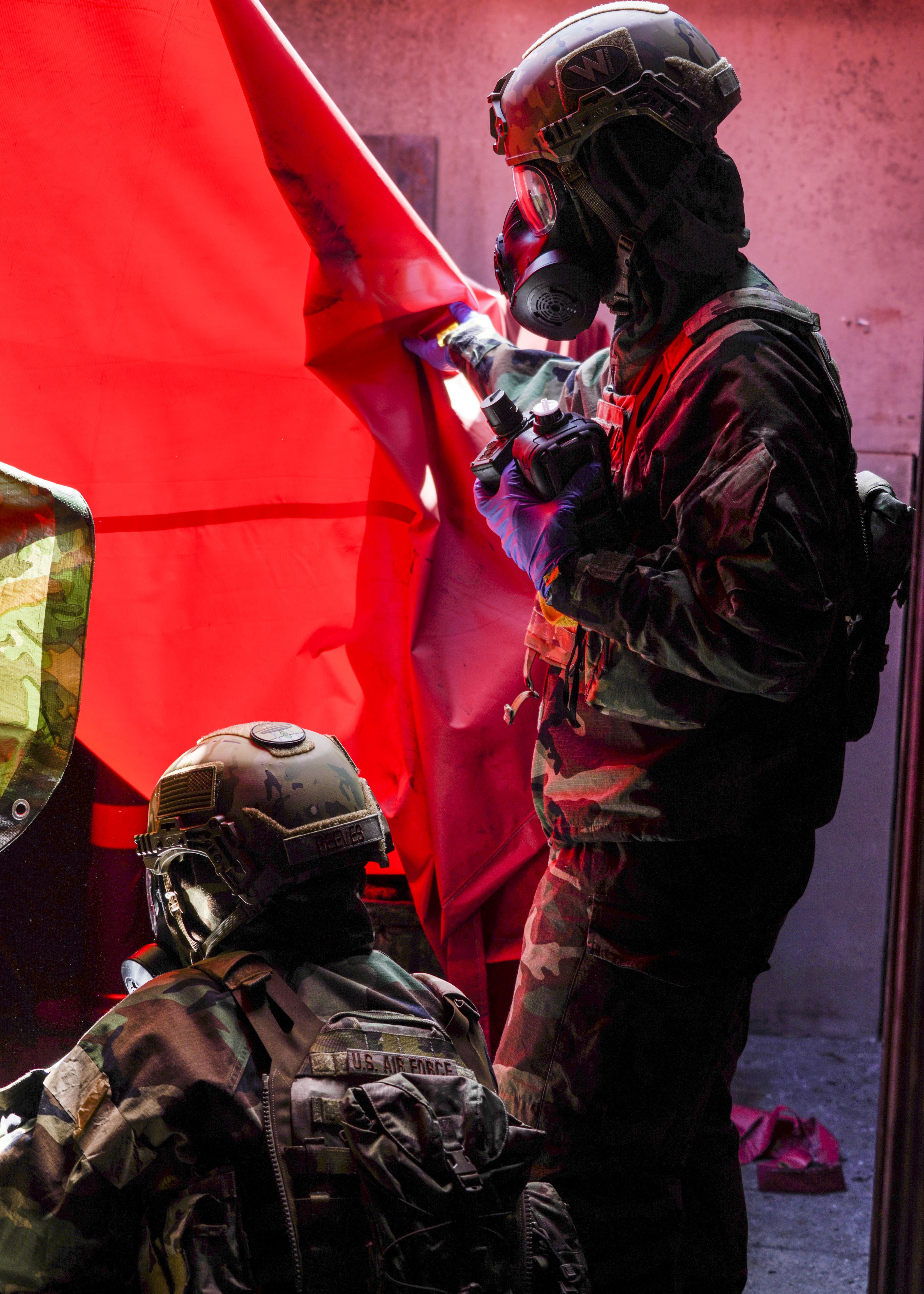
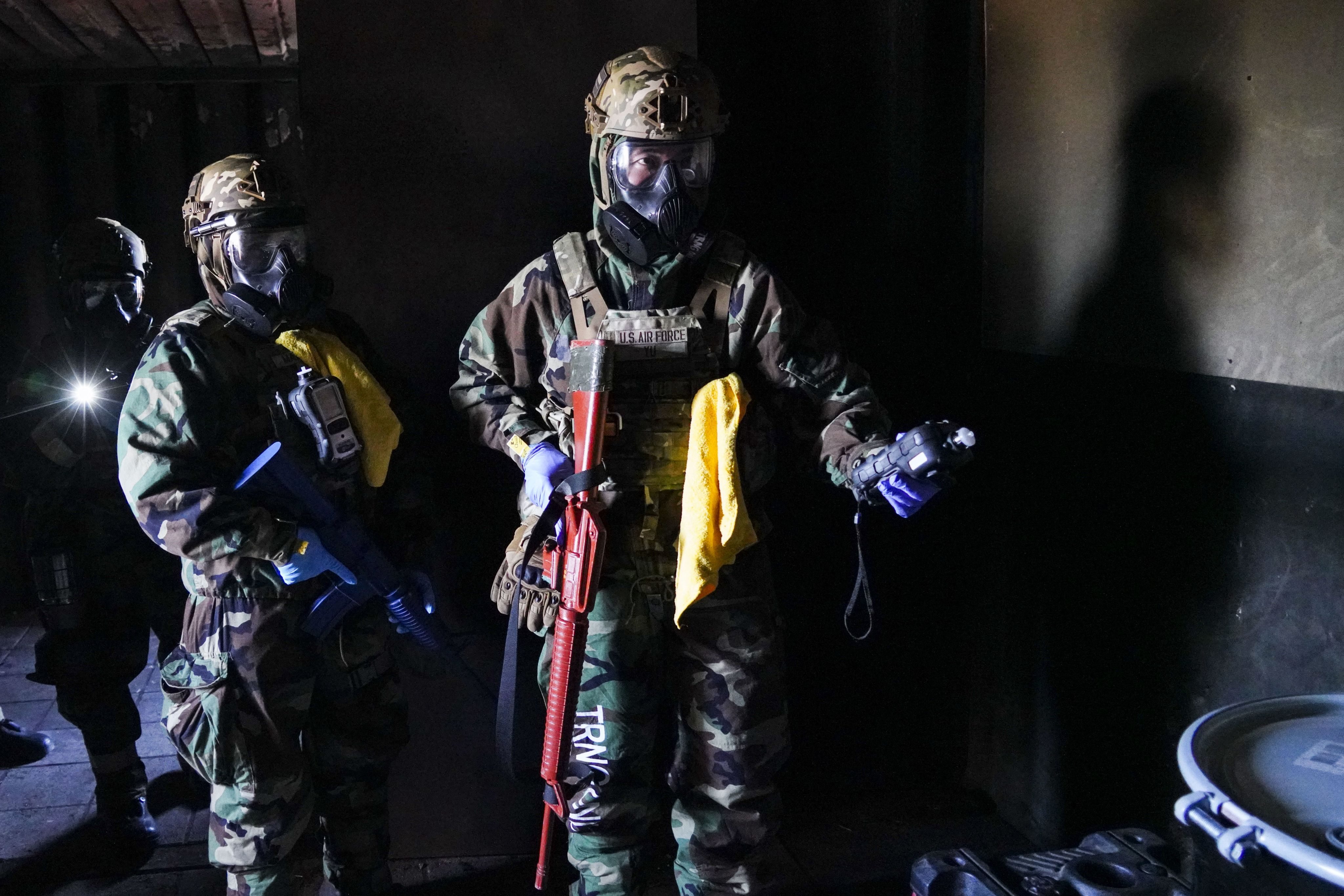
Senior Airman Jessica Reeves and Airman 1st Class Chun Yu, 146th Civil Engineer Squadron, participate in a multi-unit exercise with the 146th Security Forces Squadron, where they are responding to a potential Chemical Biological Radiological or Neurological hazard at the Oxnard College Fire Academy.
Senior Airman Jessica Reeves and Airman 1st Class Chun Yu, 146th Civil Engineer Squadron, participate in a multi-unit exercise with the 146th Security Forces Squadron, where they are responding to a potential Chemical Biological Radiological or Neurological hazard at the Oxnard College Fire Academy.
 Built with Shorthand