
Hollywood Guard Fortifies ACE Element Training at Fort Hunter-Ligget

Story by Maj. Andrei Mostovoj and Staff Sgt. Michelle Ulber
146th Airlift Wing Public Affairs
FORT HUNTER-LIGGET, Calif.— The 146th Airlift Wing participated in a Readiness Exercise at Schoonover Airfield near Fort Hunter Liggett, California, Sept. 5-9, 2023, during a multi-day exercise called Crisis Beach II, allowing participants the opportunity to perform duties outside of their Air Force careers and demonstrate their ability to execute the Agile Combat Employment model, highlighting their proactive and reactive operational strategies under simulated threat timelines to increase survivability while generating combat power.
Simultaneously delivering airlift support for Grizzly Flag, another California Military Department exercise showcasing the ability of Airmen from all five California Air National Guard bases producing Agile Combat Employment at an austere location on San Clemente Island, the 146th AW unwaveringly prevailed during an inspection on their ability to perform their core functions: cargo and equipment delivery, managing cargo and equipment yards, palletization of cargo, airdrops, and examination loading vehicles onto military aircraft.

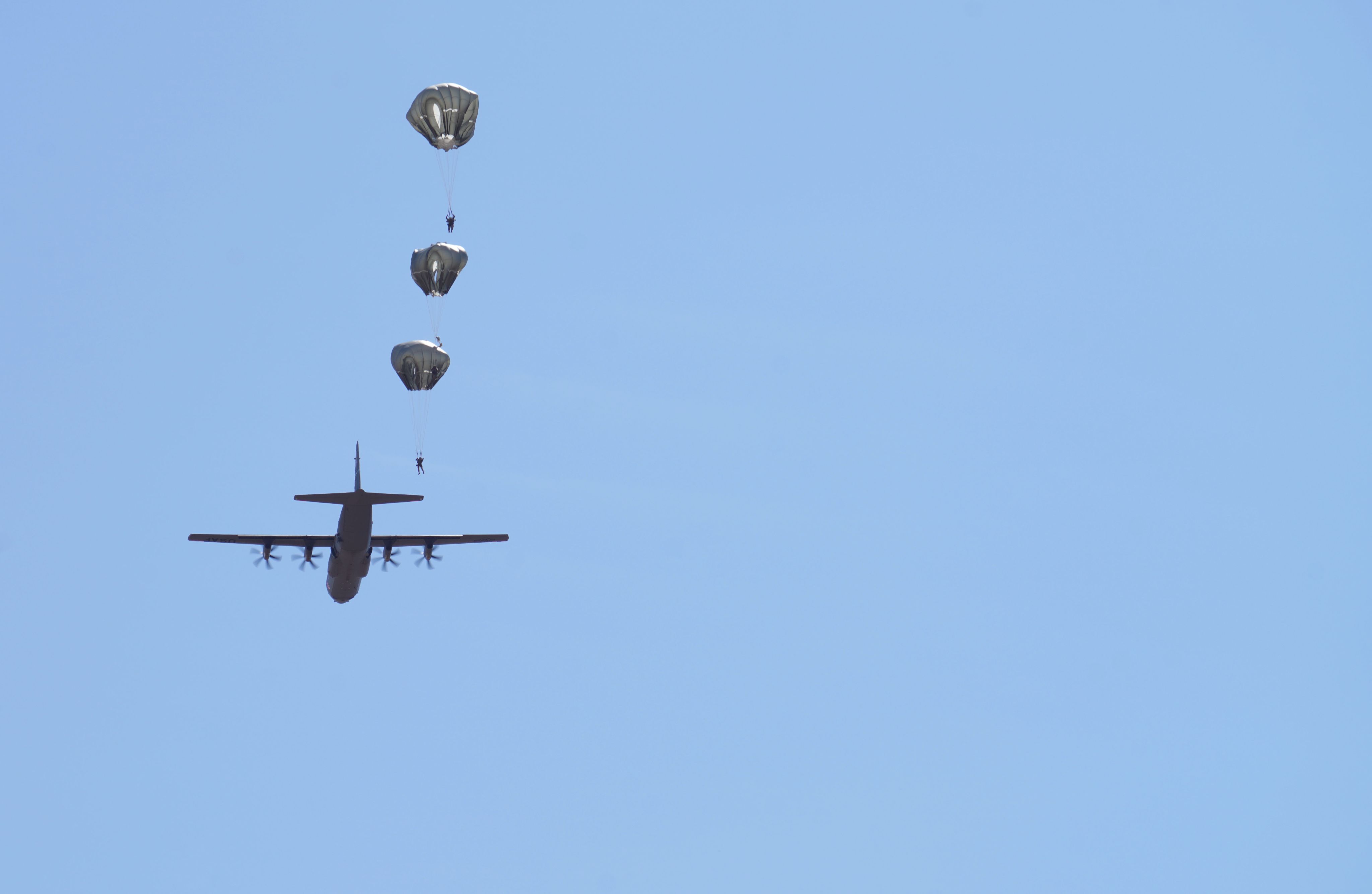
C-130J assigned to the 115th Airlift Squadron air drops members of the Army’s 346th Theatre Aerial Delivery Company during an exercise at a drop zone on Fort Hunter Liggett.
C-130J assigned to the 115th Airlift Squadron air drops members of the Army’s 346th Theatre Aerial Delivery Company during an exercise at a drop zone on Fort Hunter Liggett.
"This exercise has served as a bonding experience between myself and the people in my shop. I’m learning to do my job more effectively and with the people I serve with..."

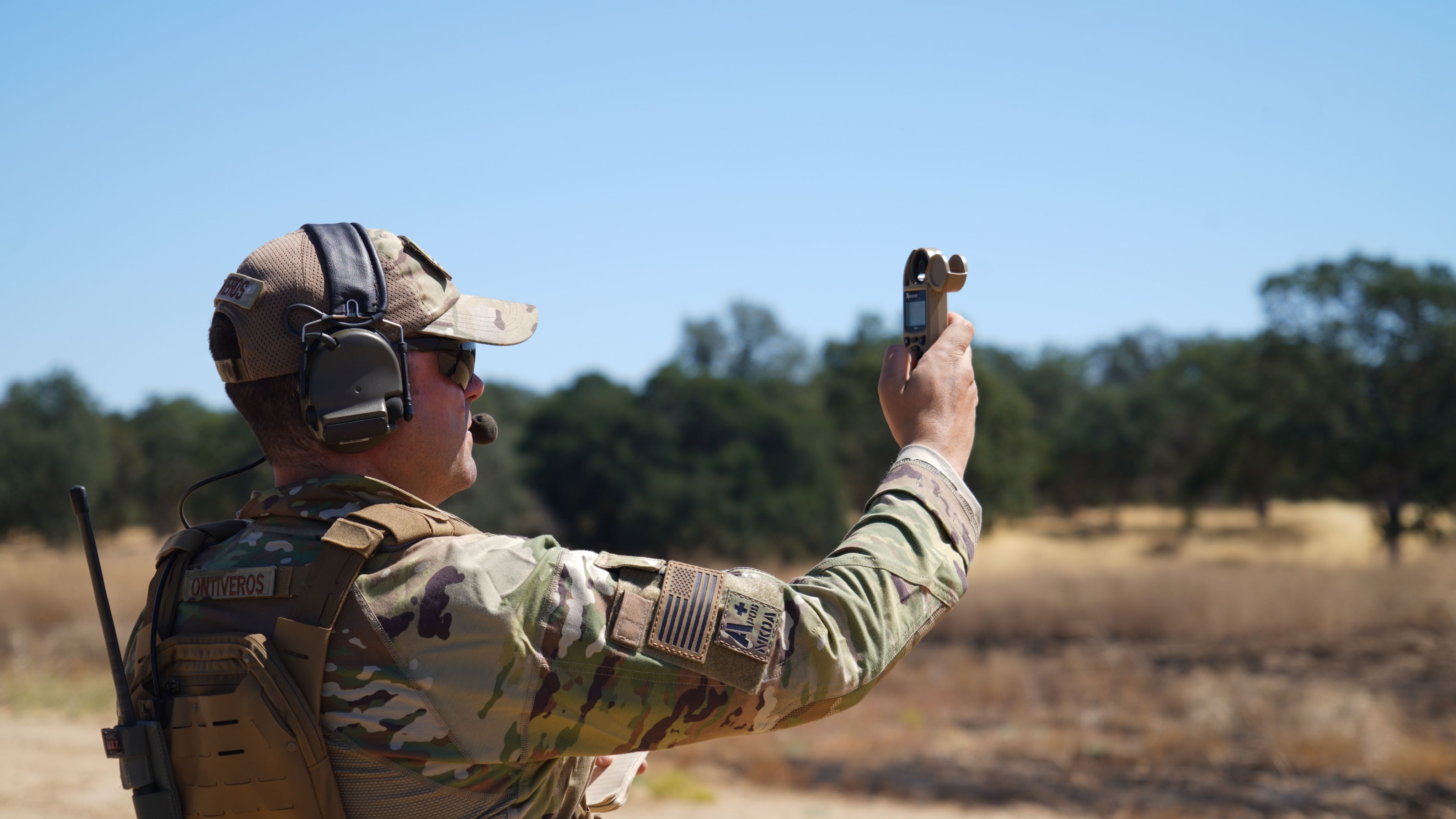
Master Sgt. Joseph Ontiveros, a ramp coordinator with the 146th Airlift Wing’s Contingency Response Flight, takes a wind speed reading during a readiness exercise at Fort Hunter-Ligget.
Master Sgt. Joseph Ontiveros, a ramp coordinator with the 146th Airlift Wing’s Contingency Response Flight, takes a wind speed reading during a readiness exercise at Fort Hunter-Ligget.
During this time, a team of over 200 exercise participants and real-world support personnel were airlifted to Schoonover Airfield, where the Wing Inspection Team evaluated their simulated contingency operations in a contested environment with limited resources.
Providing personnel support for contingency operations services and transportation services to the exercise players throughout the four-day duration, the 146th Force Support Squadron and the 146th Grounds Transportation Element delivered vital support throughout the exercise. On loan from the 129th Rescue Wing’s Civil Engineer Squadron, tents were provided with assistance and logistic support from Chief Master Sgt. Donald Simmons and Master Sgt. Michael Ucol, both assigned from the 129th Rescue Wing.
While the logistical planning for this exercise had been in the works for several years, the evaluation at Fort Hunter Liggett finally came to fruition with Lt. Col. Todd Morgan, 146th Contingency Response Flight commander, leading the overall operations.
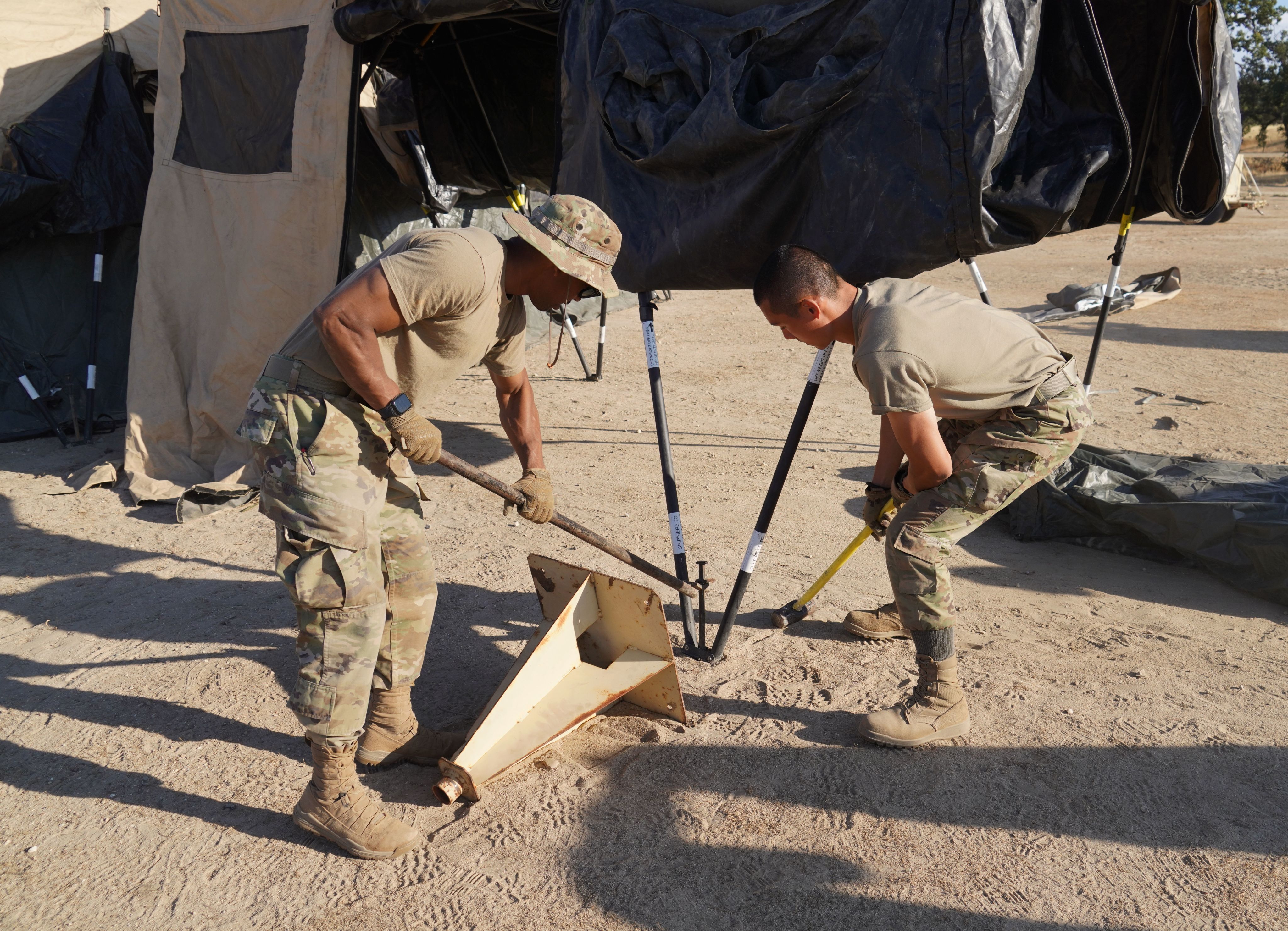
As commander, Morgan’s 146th CRF established all the airfields utilized at Fort Hunter Liggett and ensured they’d have the airport ready to receive aircraft for missions within the same day of their arrival. With the 146th CRF delivering contingency response functions for the exercise, the 146th AW leaned heavily on its own 146th Civil Engineer Squadron for infrastructure support like assembling tents and lighting.
One of the 146th CES personnel who arrived at the spoke a day before the start of the exercise was Master Sgt. Scott Luebke. Luebke’s is primarily an electrician tasked with establishing power generators and light carts for nighttime operations. However, he and his team of nine were tasked with constructing the large tents and the infrastructure needed to support the exercise.
Luebke said his team had the opportunity to broaden their skill sets by learning other critical support functions to aid the exercise while reinforcing practical problem-solving dexterities within his group.
“For many of them, this is our first time establishing a tent city from the ground up," said Luebke. "All nine members we brought installed all of the air conditioning and heating units here. While most of us have deployed and have been in charge of managing a tent city, we got the chance to establish one from nothing, and that has been a tremendous learning experience."
In addition to civil engineering, another integral component of the exercise was the ability for members to communicate with each other and track flight status and cargo movement. This process was made possible through the 146th Communications Flight.

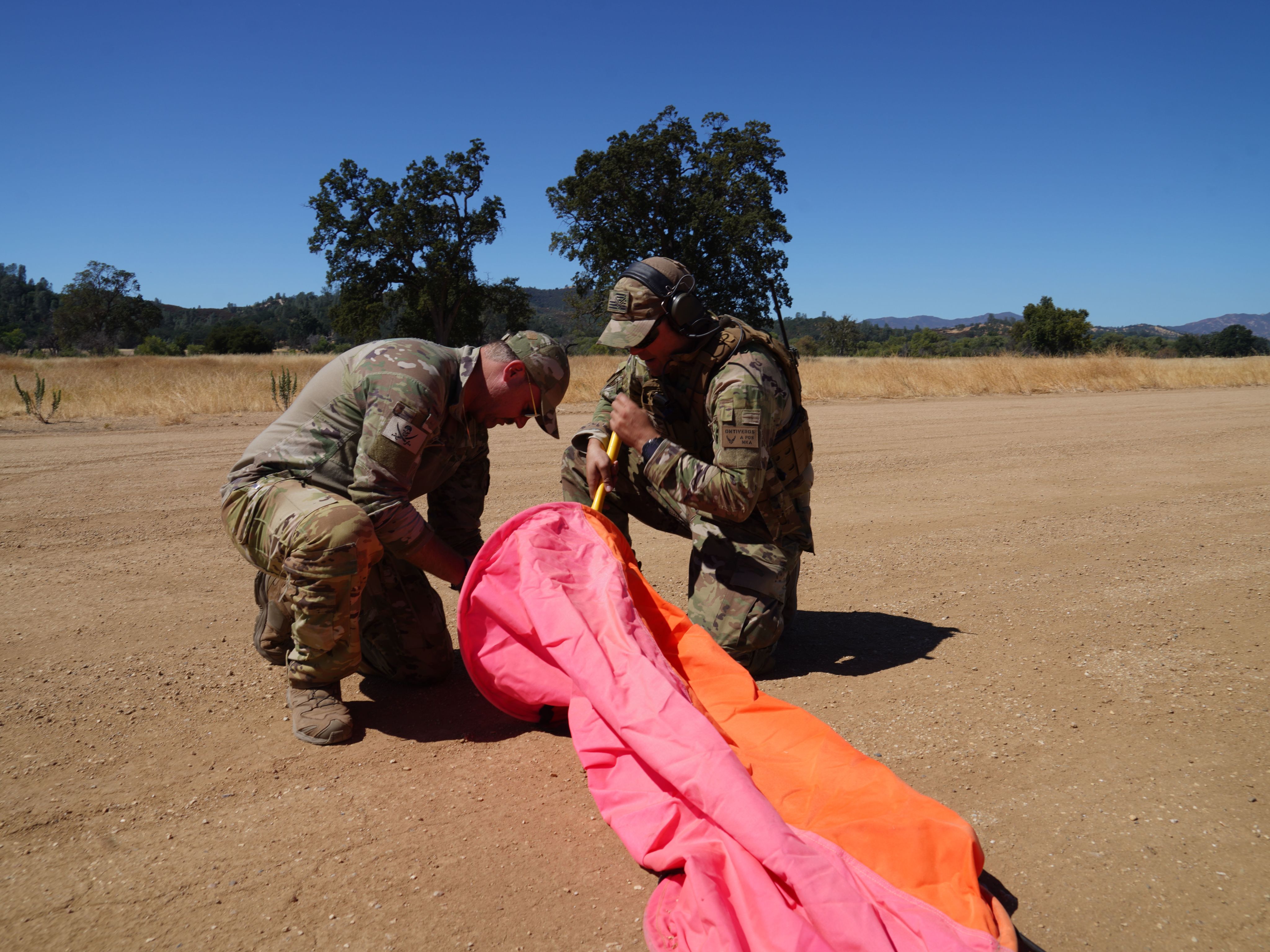
Airmen set up an air drop marker during a readiness exercise at Fort Hunter-Ligget, California, September 8, 2023.
Airmen set up an air drop marker during a readiness exercise at Fort Hunter-Ligget, California, September 8, 2023.
“This exercise has served as a bonding experience between myself and the people in my shop," said Chung. "I’m learning to do my job more effectively and with the people I serve with at the 146th.”
Beyond the players’ experience during the exercise, the real-world component for evaluating and examining the exercise players also took place in the form of the 146th Inspector General’s team.
Maj. Jonathan Fruit, 146th AW Inspector General, managed the WIT and led a 20-member team to evaluate the 146th AW, was significantly impressed, particularly by the attitudes and drive of the Airmen participating, he said.
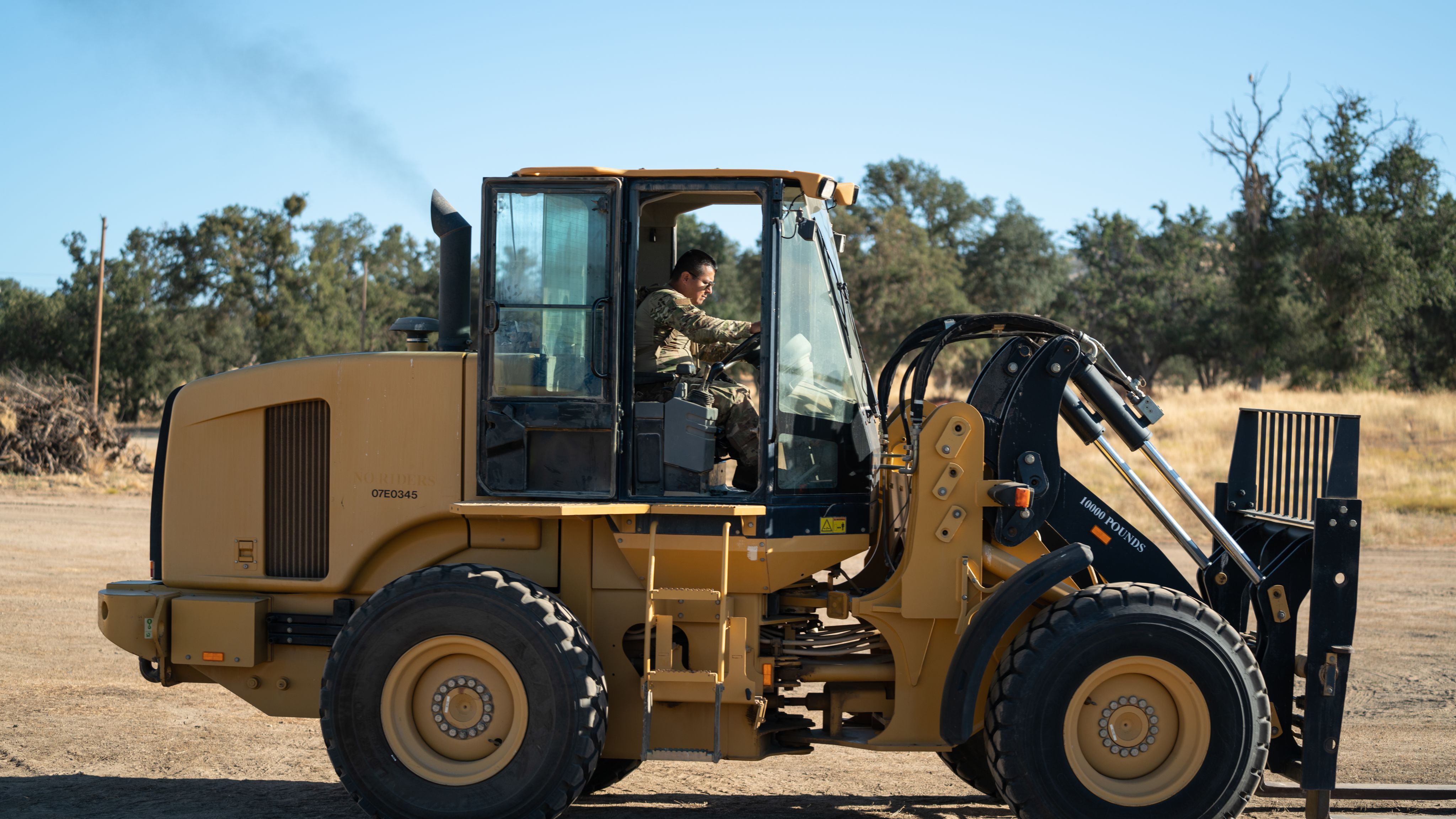
A forklift operator assigned to the California Air National Guard's 146th Air Transportation Function, transports a pallet containing gear and supplies utilized for the Crisis Beach II
A forklift operator assigned to the California Air National Guard's 146th Air Transportation Function, transports a pallet containing gear and supplies utilized for the Crisis Beach II
Airman 1st Class Kelly Chung, a recent technical school graduate on her first field exercise, said she enjoyed her first opportunity to use her skills to jump right into the exercise.
“This has been an outstanding opportunity for me to perform my job under real-world conditions," said Chung. "The injects that the evaluators threw at us keep us on our toes helped us learn to adapt and respond to different emergencies. I study electrical engineering on the outside; and I joined the Air Force to gain some real-world experience - exercises such as this one certainly have provided that.”
Chung added this type of field training helps bolster the mission and helps Airmen learn to work effectively with the people they only serve part-time with.
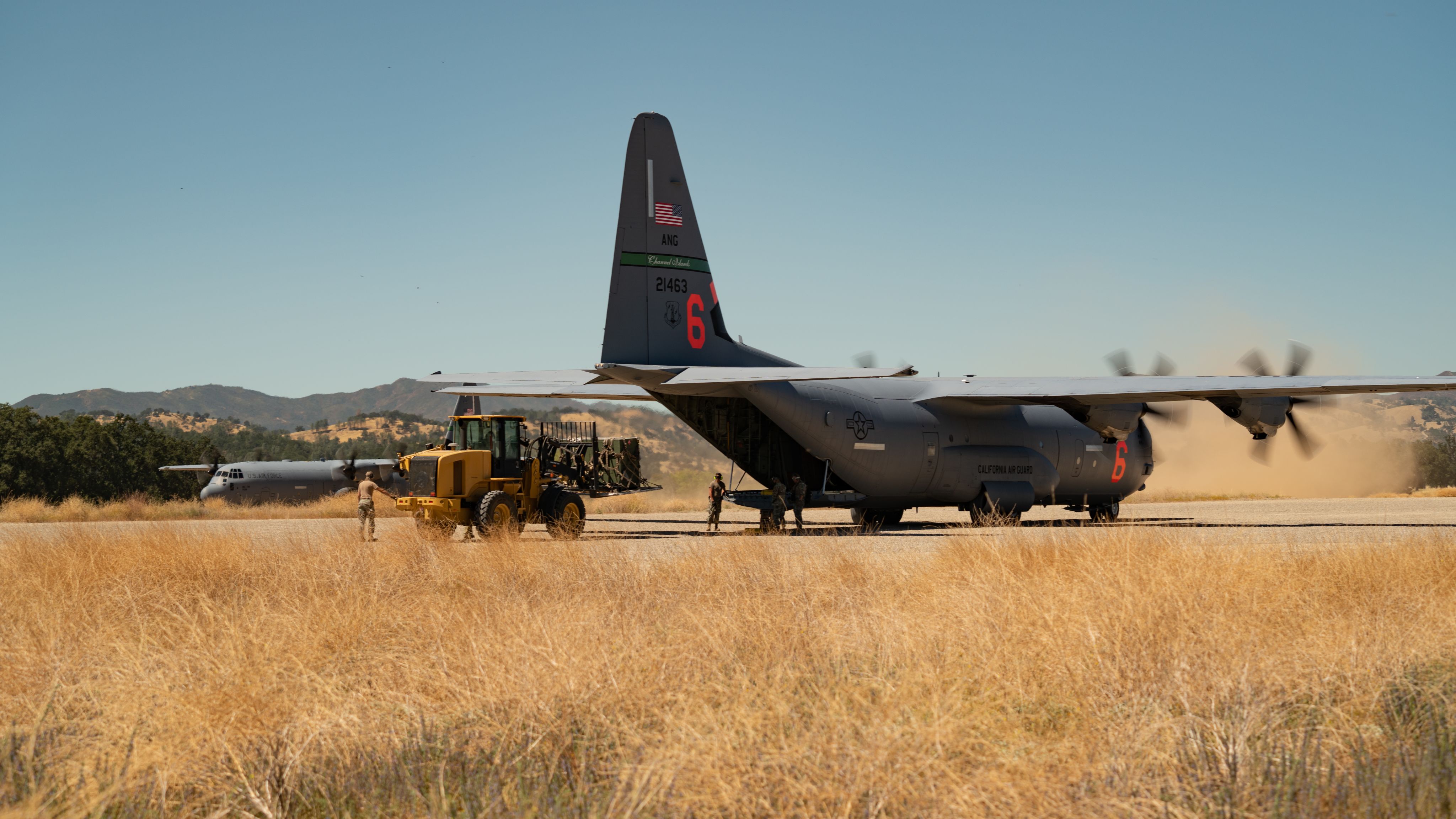
Airmen load a California Army National Guard Humvee into a C-130J Super Hercules aircraft during an exercise at Schoonover Airfield
Airmen load a California Army National Guard Humvee into a C-130J Super Hercules aircraft during an exercise at Schoonover Airfield
"We were here to evaluate the safety of our members, ensure they are following Air Force regulations, and learn what we can do to improve how we operate," said Fruit. "During that time, we also saw how they responded mentally during those injects, and I was pleased to see our Airmen’s resolve."
Tennant units from Fort Hunter Liggett’s 356th Logistical Support Battalion, in conjunction with aircrew members assigned to the 115th Airlift Squadron, began loading their Humvees onto the 146th AW’s flagship aircraft, the C-130J Super Hercules. During airborne jump training, the U.S. Army’s 346th Theatre Aerial Delivery Company (Airborne) also parachuted from the 146 AW C-130J aircraft flying over Fort Hunter Liggett.
Closing out the final training day in the late afternoon at the historic Mission San Antonio de Padua on Fort Hunter-Liggett, U.S. Air National Guard Chap. (Maj.) Aaron Bayles, 146th Airlift Wing Chaplains Corps, gathered a congregation from the exercise and performed evening catholic mass. Bayles used the opportunity to remind the service members in attendance to use this exercise to grow and become better Airmen.
“We must take this time to be able to learn from our mistakes and remember the importance of counseling members in a manner that is both constructive and appropriate so that they may develop into better leaders,” said Bayles.
As the final day of the exercise came, Morgan and the 146th CRF shut the airfield down for airlift operations to travel back to the 146th AW. Morgan said while most contingency response elements are known for establishing airfields, many lesser-known additional commitments also fall to CR during contingencies.

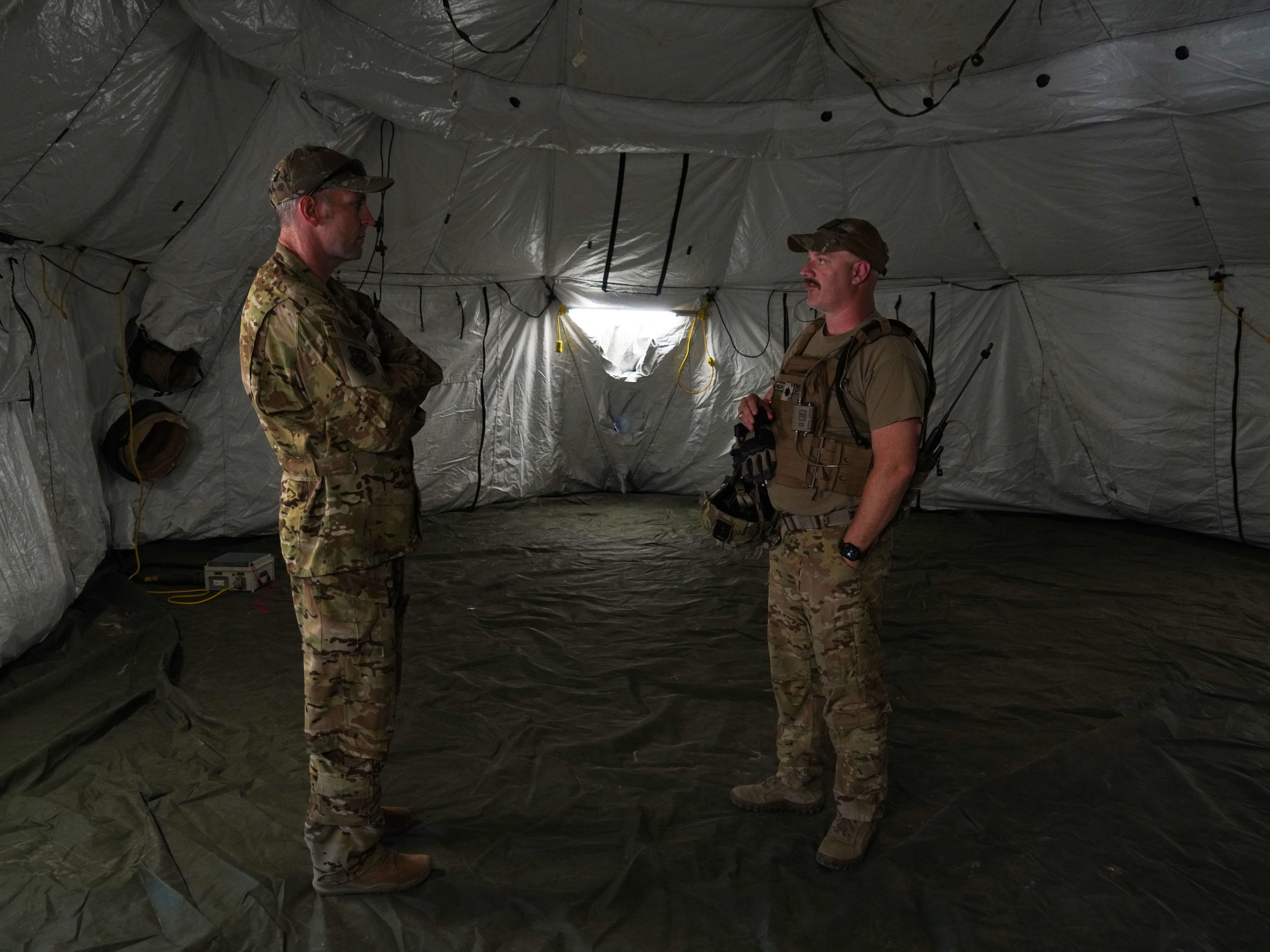
“CR is a bridge between the seizing force and an occupying force," said Morgan. "In combat environments, Army or Marine units can capture an enemy airfield. Then, it is up to CR units to arrive within a certain timeframe and ensure that the airfield is cleared and ready to accept aircraft and cargo. In addition to establishing airfields, one of the other important missions often overlooked is the closing down of airfields after operations have ended. Planes cannot depart from unsecured locations, and CR units are used to close down military operations officially.”
Morgan said the exercise was a success overall, highlighting the wing’s resiliency to overcome the inspection injections and the knowledge gained from working in the austere environment Schoonover Airfield provided.
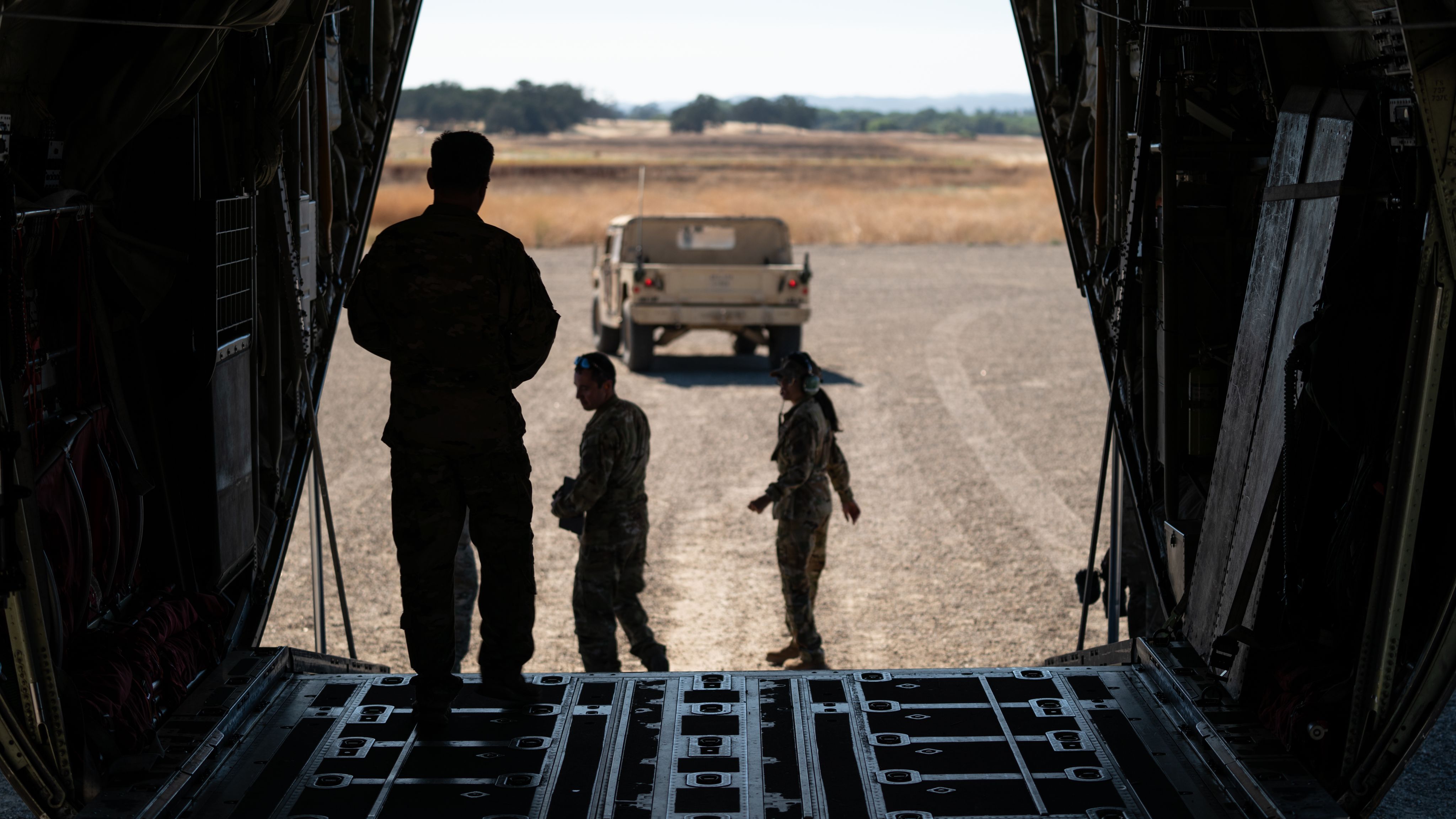
Airmen assist in loading a California Army National Guard Humvee during an exercise at Schoonover Airfield.
Airmen assist in loading a California Army National Guard Humvee during an exercise at Schoonover Airfield.
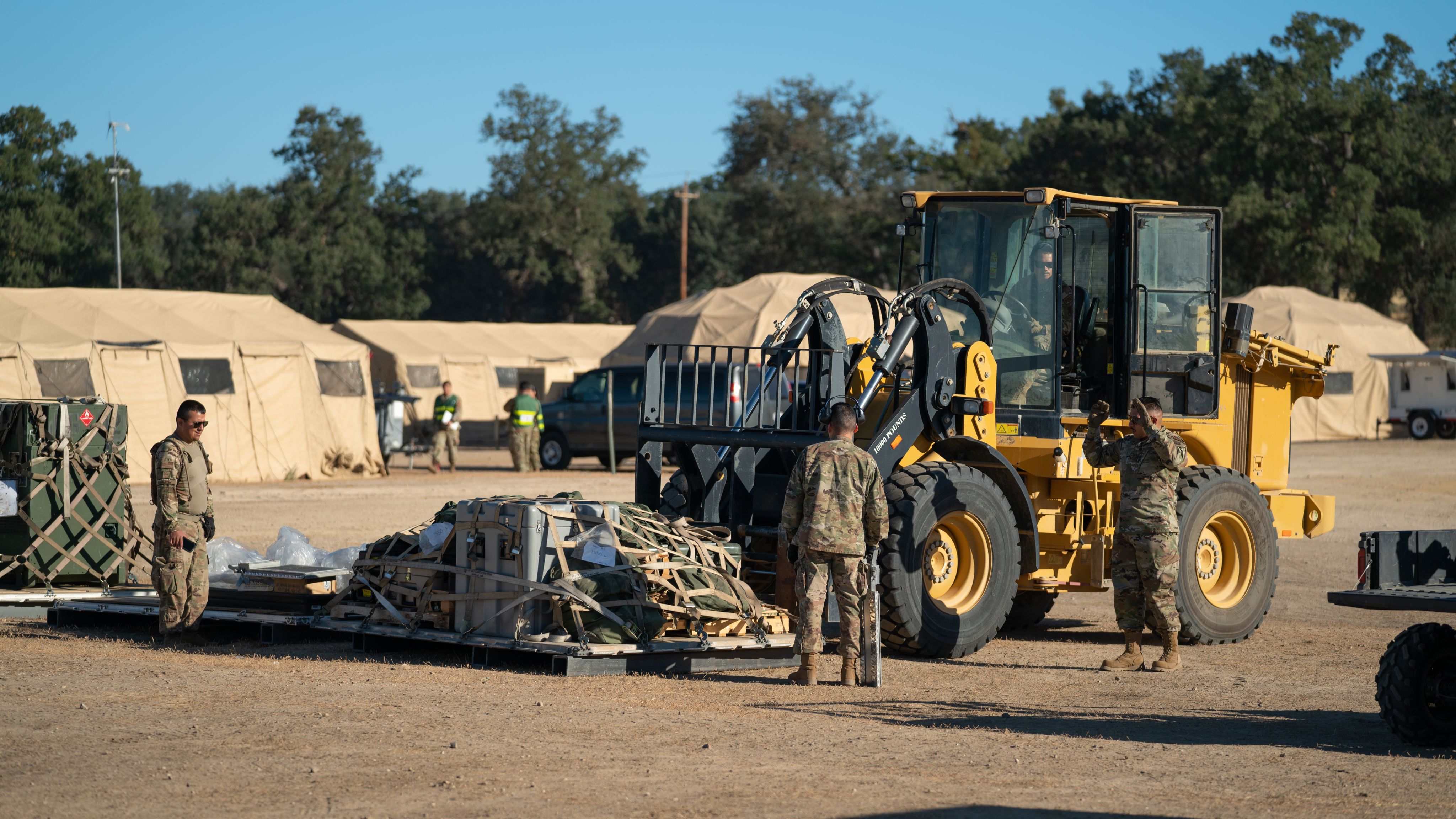
Airmen unpack a pallet containing gear and supplies utilized for the Crisis Beach II exercise at Schoonover Airfield.
Airmen unpack a pallet containing gear and supplies utilized for the Crisis Beach II exercise at Schoonover Airfield.
“I think this was a great learning experience," said Morgan. "We are getting the opportunity to teach our Airmen a new method of fighting and how to execute the mission. We came out here to see how our Airmen could operate in an environment they aren’t used to, in an unfamiliar area, without your whole team - and they successfully handled multiple jobs outside their normal purview.”
“We’re not looking through that soda straw hole world anymore," said Morgan. "Our Airmen are expected to be subject matter experts in their career field while becoming [proficient] in every [job] around them. That is what has created the success of this exercise during our time out here.”


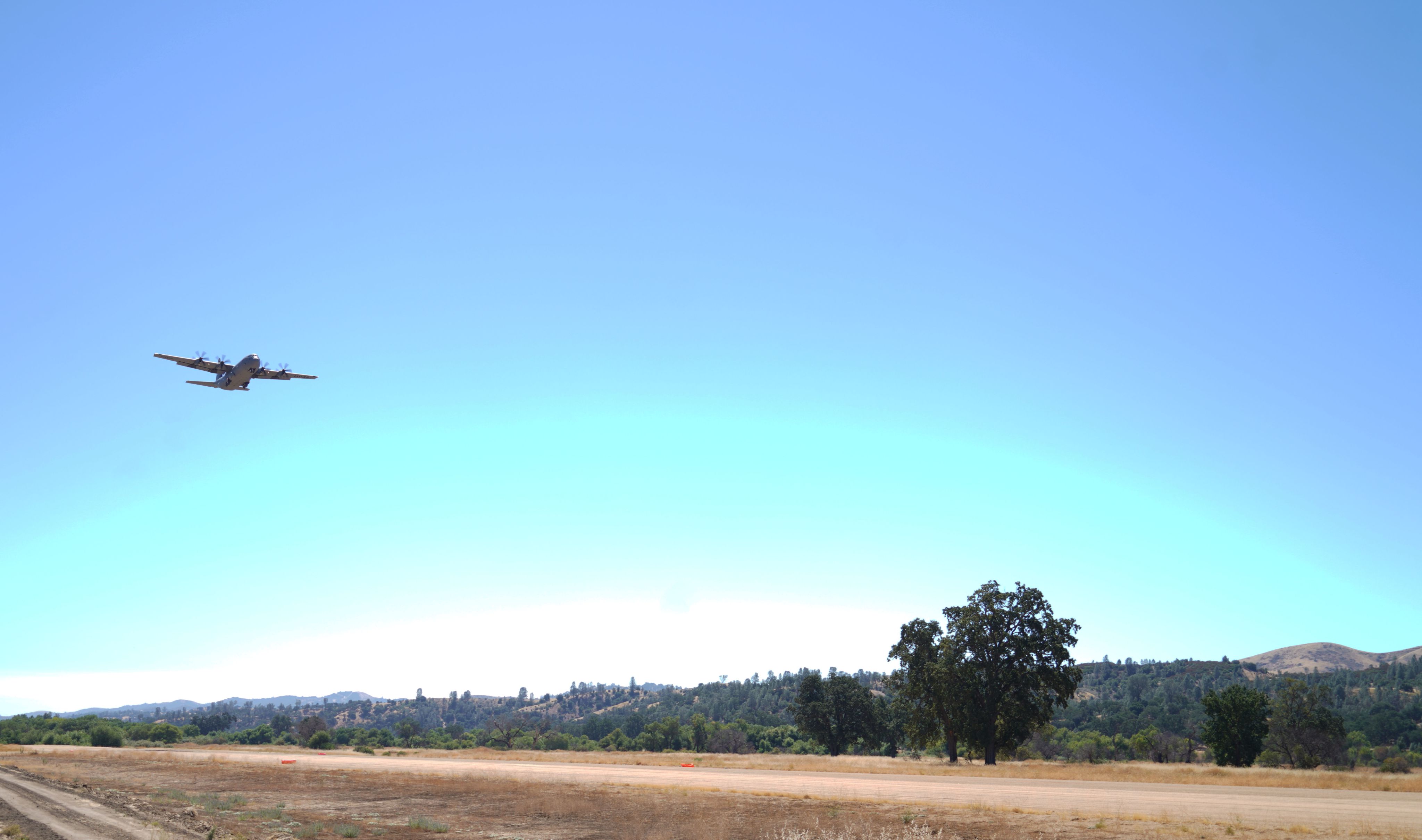
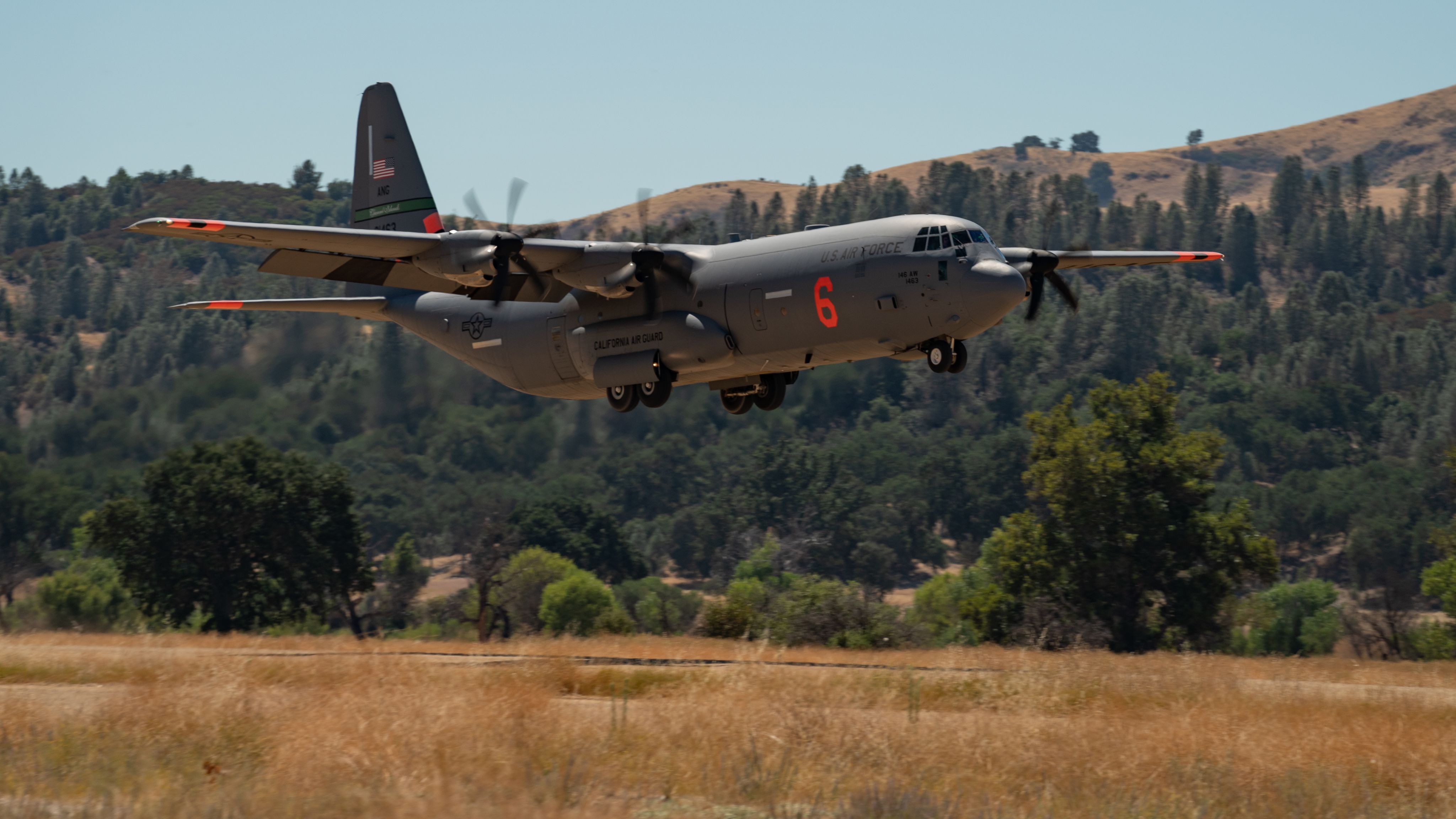
A C-130J assigned to the 115th Airlift Squadron lands at an improvised dirt runway during an exercise at Fort Hunter Liggett. (U.S. Air National Guard photo by Staff Sgt. Michelle Ulber)
A C-130J assigned to the 115th Airlift Squadron lands at an improvised dirt runway during an exercise at Fort Hunter Liggett. (U.S. Air National Guard photo by Staff Sgt. Michelle Ulber)
 Built with Shorthand