
No Soldier left behind
Cal Guard Recruiter helps save former recruit


March 31, 2022
By Salli Sablan
California National Guard Public Affairs
SACRAMENTO, Calif. - The sun had not yet risen when Staff Sgt. Damian Rubio received a frantic phone call from law enforcement officers asking him to immediately report to a critical scene. A young former recruit of his was threatening to end his life with a loaded shot gun, and asked for him.
As the Cal Guard recruiter threw his clothes together and rushed to his vehicle, he knew who he would be seeing and he hoped no one was dead. He didn’t want anyone to die or get hurt. The young man in question was a recruit Rubio had been supporting through some tough conversations.
As Rubio reached the scene, the Soldier was standing and pointing a weapon at himself, while California Highway Patrol and Sutter County officers stood in the background, their weapons also drawn. Rubio felt powerless with law enforcement holding him back for his protection and not being able to stop the highly charged situation.
This former recruit had completed basic training in between his junior and senior year of high school. After graduation, he would depart to Advanced Individual Training to learn his job, then return to build a new life for himself in the military.
Rubio met him on a trip across the state, where recruiters return recruits home after training. While Rubio was not his original recruiter, they grew close during the long trip. The recruiter shared his checkered past as a continuing education youth, in and out of school, and becoming a teen parent in the 11th grade. Rubio’s family, friends and teachers could not see him joining the military.
But it was the Cal Guard that changed Rubio’s life. Some of his successes include the opportunity to compete for Soldier of the Year in 2014 and becoming a top, award-winning recruiter. His most memorable years were connected to his role with the Civil Support Teams. The CSTs are frequently called to monitor potential outside threats to widely attended, national events. This meant he had access to Super Bowls, World Series, Grammys, and Oscars, all because of his military job.
One day, soon after that long ride, the recruit reached out to Rubio, confiding in him that he was struggling with suicidal thoughts. Worried, Rubio became devoted to finding the Soldier help.
Rubio explained he had a close friend who sent him an uncharacteristic, odd text.
After making plans to hang out the following weekend, Rubio had a strange sensation. He shrugged it off, knowing he would speak frankly with his friend during the upcoming weekend. “I did end up seeing my friend that weekend – at his funeral. Not at all how I planned” he said sadly.
“I had a bad feeling and I thought I had said enough with making solid plans in four days but I was wrong. I knew he was depressed but I thought I could cheer him up,” said Rubio.
That was my plan, but I didn’t ask the question, why didn’t I ask the question,” ponders Rubio. From then on, he made the vow to never let an opportunity pass to say more to anyone he thought might be struggling.
“I think there is a lot of shame when people have suicide ideation,” said Capt. Cassaundra Meredith, a Behavior Health Officer and the commander of Medical Command, North Detachment.
“This causes people to be hesitant in disclosing. Mental health seems to carry a stigma which is magnified when it comes to suicide,” said Meredith, who works full time for the VA as a licensed clinical social worker in the Caregiver Support Program.
“When someone is vulnerable and shares their pain, it’s critical to listen to them rather than to try and fix the situation. It’s common for people to jump into a ‘fix it’ mode, because people are programed to not wanting to see anyone hurting,” said Meredith.
She says the first and most important step is to just listen. You can acknowledge they must feel overwhelmed, let them know that you are going to support them and be by their side, and most importantly, show empathy as Rubio was able to do.
The next step would be connecting the person with Army leadership, chaplain, behavioral health, or providing them the national suicide prevention hotline at 800-273-8255 with you by their side. However, if someone has a plan, there is a different process.
You can escort them to the closest emergency room so they can work on stabilization with medical staff and get connected to care, explains Meredith.
“It’s hard to gauge how someone is really doing,” says Capt. Anna Yribe, officer in charge of Cal Guard’s Resilience, Risk-Reduction, Suicide Prevention Program.
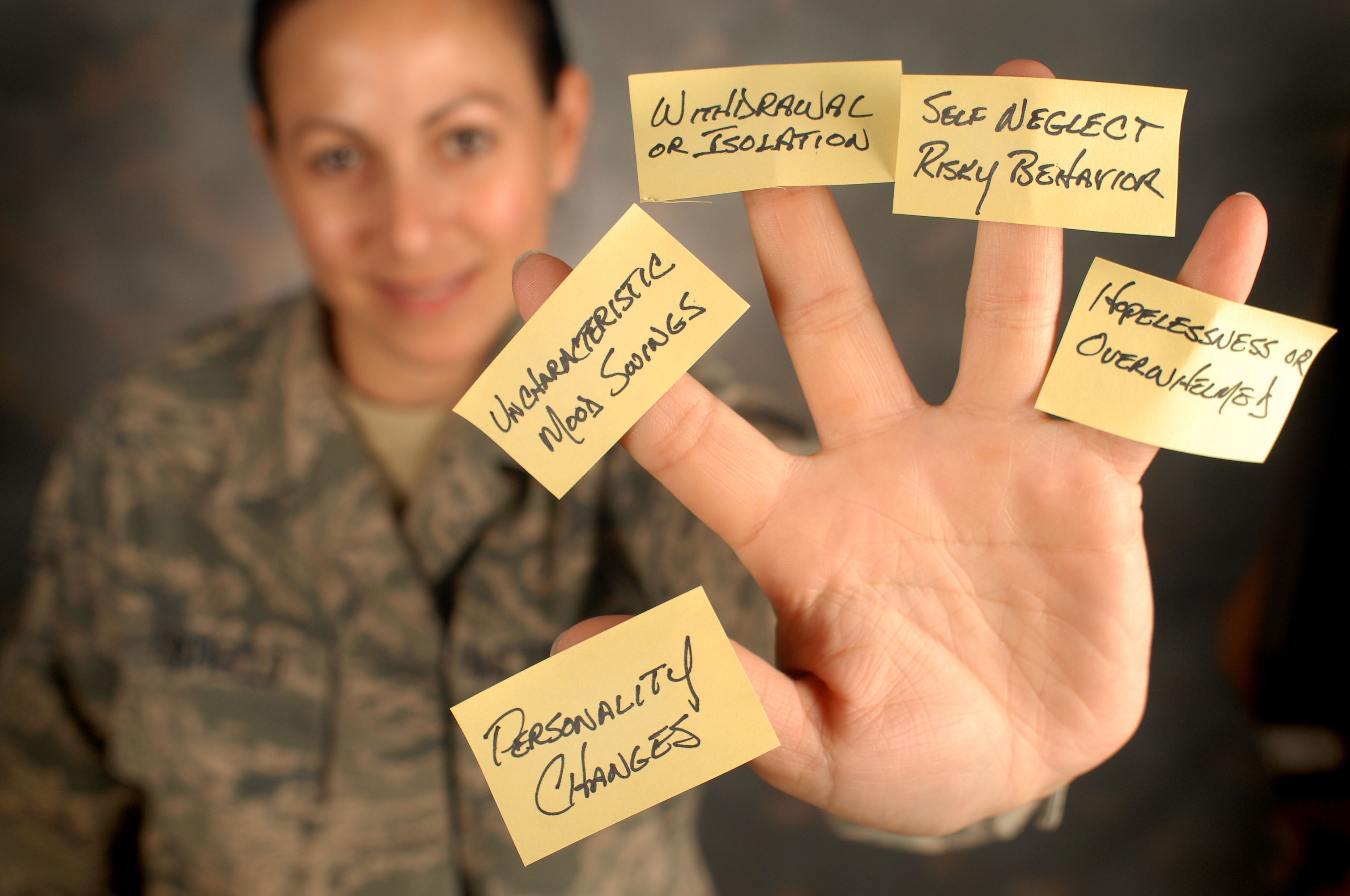
The suicide prevention piece is more than just knowing the signs because a lot of times you don’t see signs or we miss the signs,” she said. “One thing that gets in the way of an appropriate response is our inability to be good communicators from the text craze, social media and most recently, distancing from each other,” explains Yribe.
“That leads to our ability to build strong relationships. Are you thinking of killing yourself, are you thinking about suicide? These are really hard words and then to maybe receive the yes answer is tough,” she said.
Yribe believes adding in Army resiliency classes the Ask, Care and Escort program and Applied Suicide Intervention Skills Training courses, are the two pillars of suicide prevention and may provide positive mental health skills to the masses. Those 14 skills can be life savers if people know about them and practice them regularly, she said.
“You have to be ready for that kind of stuff so that’s what we teach in the ASIST. Think of suicide first aid, combined with ACE supports how to respond when someone says yes,” said Yribe.
Yribe shares a personal story and describes going through a challenging time in her life several years ago. “I wasn’t quite myself and my work wasn’t tanking, but it wasn’t the same. If it wasn’t for an observant leader who noticed these slight differences, I honestly don’t know where I would be today,” she said.
Being asked if she was okay was a turning point to a dark time because the asking allowed her to say how she was feeling, she said. Because of the quality of this relationship, there wasn’t judgment. She was able to talk honestly about what she was experiencing which made her feel seen, heard and not alone. She shares it put her on a different trajectory.
“The ACE/ASIST courses and resiliency training can build strong coping skills to share with your family, your kids, co-workers, anyone because these are not just Soldier skills, they’re human skills. Add in knowing your people, and we could be in a really good spot,” said Yribe.
While Rubio was part of the five hour stand down with the recruit, he reached out to his leadership and called Command Sgt. Major Curtis Hays to the scene.
“Without ever being directly involved with the recruit, I can’t accurately express the relief that overcame me watching the recruit finally lay down his weapon and allow the officers to approach and apprehend him safely,” said Hays.
He shook the hand of Rubio and thanked him for being a leader of Soldiers that we all strive to become. He was also able to talk to the recruit and thank him for ultimately making the best decision to receive help said Hays.
Hays shared personal and professional lessons learned from this incident: “Communication is key. The recruit was handed off to Rubio and he was brought into the tight knit fold of his group of recruits and received continued and sincere communication and frequent interaction,” shared Hays.
That day, the former recruit received the medical attention he needed and was connected to mental health resources. He still reaches out to Rubio as they are close friends. Rubio keeps telling him, “You can still make something of yourself, just be the best at everything you’re going to do.”




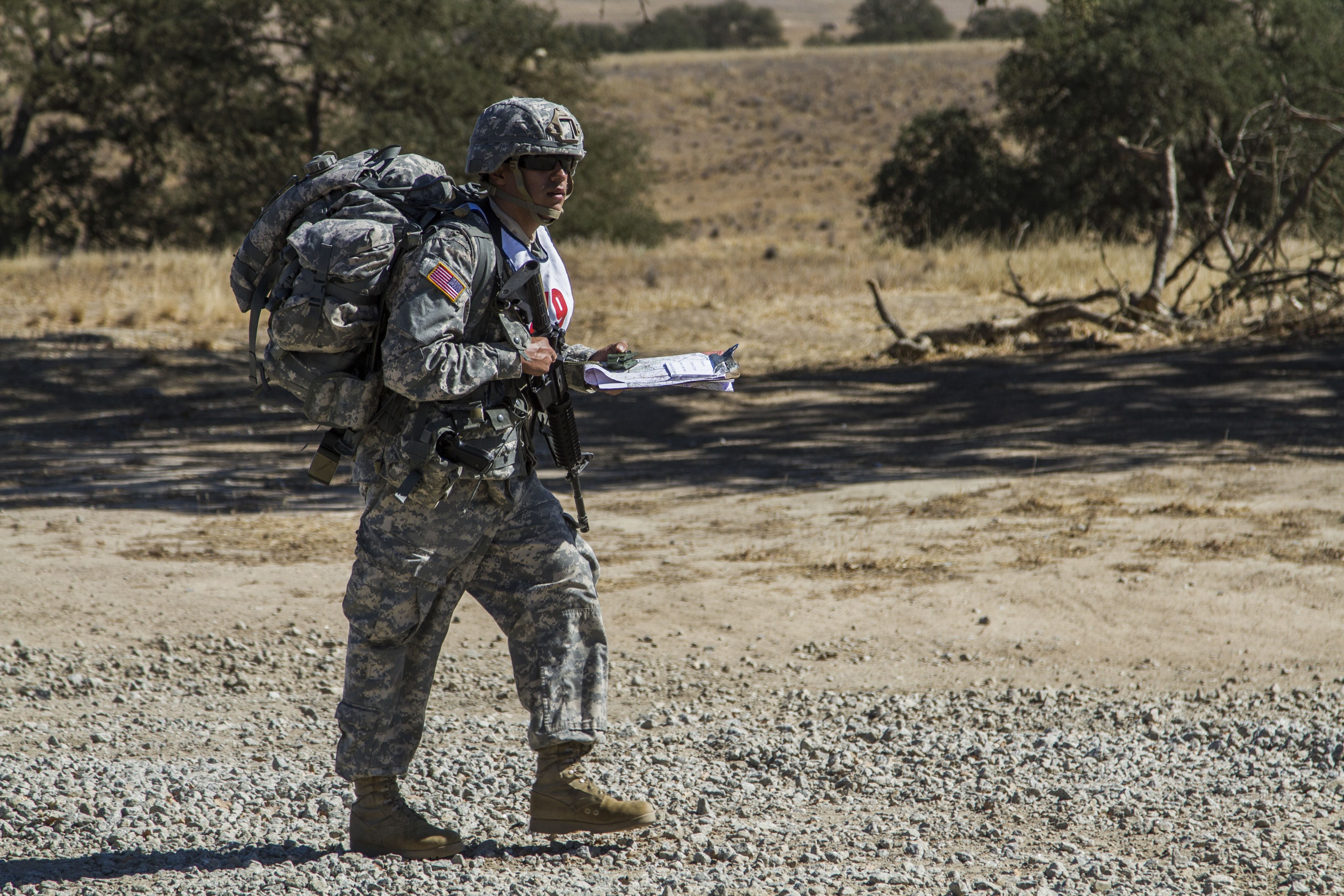



Sgt. Damian Rubio from the 9th Civil Support Team orients himself with his map and compass in the Unknown Distance Ruck March during the 2014 Best Warrior Competition at Camp Roberts on Oct. 21. (U.S. Army National Guard photo by Sgt. Ian M. Kummer)
Sgt. Damian Rubio from the 9th Civil Support Team orients himself with his map and compass in the Unknown Distance Ruck March during the 2014 Best Warrior Competition at Camp Roberts on Oct. 21. (U.S. Army National Guard photo by Sgt. Ian M. Kummer)

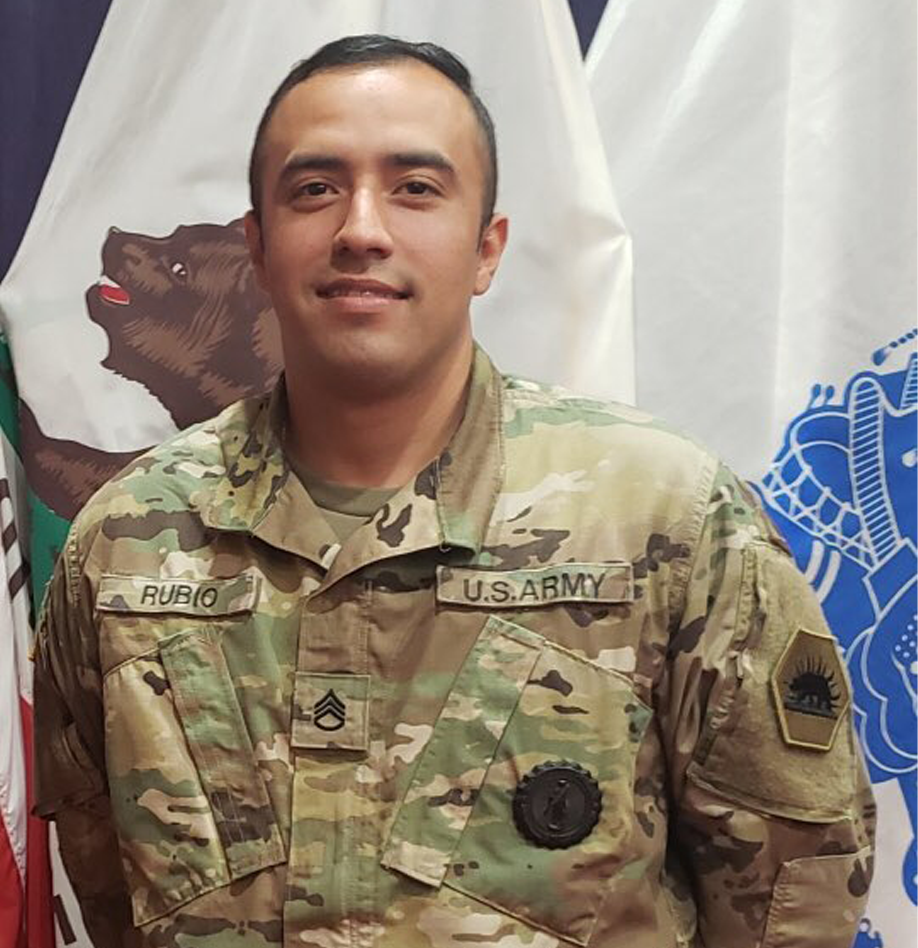
Sgt. Damian Rubio poses in front of the Californian flag. (courtesy photo)
Sgt. Damian Rubio poses in front of the Californian flag. (courtesy photo)

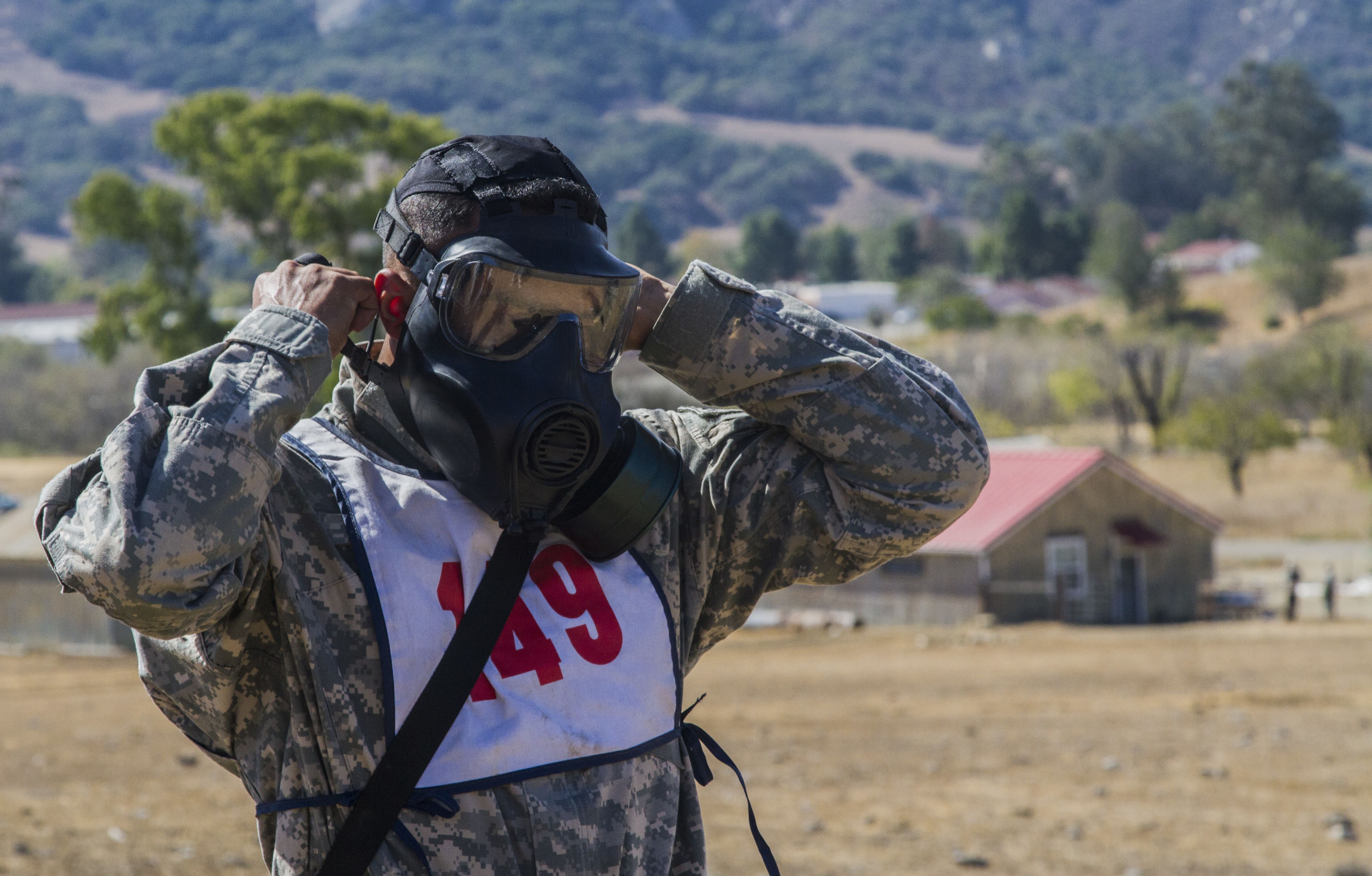
Sgt. Damian Rubio from the 9th Civil Support Team puts on his protective mask before starting the Chemical, Biological, Radioactive and Nuclear (CBRN) event during the 2014 Best Warrior Competition at Camp San Luis Obispo on Oct. 22. (U.S. Army National Guard photo by Sgt. Ian M. Kummer)
Sgt. Damian Rubio from the 9th Civil Support Team puts on his protective mask before starting the Chemical, Biological, Radioactive and Nuclear (CBRN) event during the 2014 Best Warrior Competition at Camp San Luis Obispo on Oct. 22. (U.S. Army National Guard photo by Sgt. Ian M. Kummer)


 Built with Shorthand